
The African Grandmaster Gap, Issue 1
As the 2026 World Chess Championship begins in Geneva on November 24, the chess world turns its attention to the battle between reigning champion D. Gukesh of India and challenger Javokhir Sindarov of Uzbekistan. Both players are 20 years old, making this the youngest World Championship match in history.

At the highest level of chess, the pursuit of the Grandmaster title represents years of preparation, sacrifice, opportunity and sustained performance. Yet, across Africa, the journey to that title has not always depended on talent alone.


Few stories illustrate this more clearly than that of Zimbabwe’s Robert Gwaze, an International Master who produced one of the most remarkable individual performances in Olympiad history, won the African Individual Championship, accumulated two Grandmaster norms and still never became a Grandmaster.
His journey raises an important question: how many African players have had the ability to reach the highest level but lacked the opportunities and support required to get there?
A Prodigy from Glen Norah
Born in 1982, Robert Gwaze began his chess journey with the Glen Norah Gunners club in Harare, Zimbabwe. His talent earned him a chess scholarship to Prince Edward School, where his development continued.
In 1997, at just 15 years old, he became Zimbabwe’s senior national champion. A year later, he won the African Junior Championship in Kenya. His progress culminated in the award of the International Master title in 2001.
However, it was at the 35th Chess Olympiad in Bled, Slovenia, in 2002 that Gwaze produced a performance that would place his name in the history books.
Playing on board one for Zimbabwe, the 20-year-old won all nine games he contested, finishing with a perfect score of 9/9 and a performance rating of 2690. He also claimed the individual gold medal on his board.
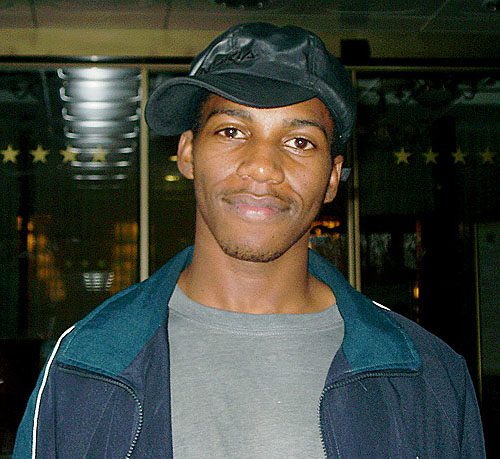
According to OlimpBase, the Olympiad record archive, and FIDE’s historical records, only one other player had achieved a perfect 9/9 on the first board at an Olympiad: Alexander Alekhine, in Hamburg in 1930.
Gwaze’s achievement was extraordinary. It demonstrated that African players could compete at an exceptional level against some of the strongest players in the world.
He represented Zimbabwe at four Olympiads: Elista 1998, Istanbul 2000, Bled 2002 and Istanbul 2012, scoring 23.5 points from 36 games. At the 2011 All-Africa Games in Maputo, he also recorded 6.5/7 on top board, the best individual result on that board.
For a player with such achievements, the Grandmaster title appeared to be a natural next step.
Champion of Africa, in Windhoek
The African Individual Championship held in Windhoek, Namibia, from September 1 to 9, 2007, brought together players from 14 countries, including Egyptian Grandmasters Bassem Amin and Ahmed Adly.

Gwaze began the tournament in impressive fashion, winning his first five games before drawing his remaining four. His unbeaten score of 7/9 gave him the championship, half a point ahead of a group led by Angola’s International Master Pedro Aderito.
It was a major achievement. Gwaze had become champion of Africa and secured qualification for the 2007 FIDE World Cup in Khanty-Mansiysk, Russia, where he faced Spanish Grandmaster Alexei Shirov in the first round.
He qualified for the World Cup again in 2011 through the zonal tournament in Gaborone, Botswana, where he faced another formidable opponent, Ruslan Ponomariov, in the opening round.
Yet, despite winning the continental championship, Gwaze did not receive the Grandmaster title.
The reason was the FIDE title regulation in force at the time.
Under the regulations valid until June 30, 2013, an outright winner of a continental championship received a single nine-game Grandmaster norm. Players sharing first place, up to three in number, could receive the International Master title.
For Gwaze, who was already an International Master, the continental victory provided one Grandmaster norm. It did not automatically make him a Grandmaster.
The traditional route required norms covering at least 27 games and a rating of 2500. A player could therefore demonstrate exceptional strength and still remain short of the requirements for the title.
Gwaze’s highest published FIDE rating was 2454, recorded in 2012. The Chess Drum reported in 2024 that he had accumulated two Grandmaster norms and identified the cost of travelling to tournaments as the biggest obstacle to securing the third.
On the November 2026 FIDE rating list, he remains rated 2428, the highest-rated Zimbabwean player, active or inactive.
His story is a reminder that the distance between being good enough and becoming a Grandmaster can sometimes be determined by access to opportunities.
When The Rules Changed: A Title That Came Too Late
From July 1, 2013, FIDE introduced a significant change to its direct-title regulations.

Under the revised arrangement, the champion (gold medallist) of a recognised continental individual championship, provided the player was not already a Grandmaster, became eligible for the Grandmaster title directly. This provision applied across all continental championships, not just Africa.
Since July 2017, the title has also been subject to a minimum rating requirement of 2300, with conditional award provisions for players who have not yet reached that threshold.
The change transformed continental championships into an alternative pathway to the Grandmaster title, beyond the traditional norm system. Players tied for first place could earn a Grandmaster norm, while the silver and bronze medallists became eligible for the International Master title.
The first African Individual Championship held under the new regulations took place in December 2014, again in Windhoek.
South Africa’s International Master Kenny Solomon, rated 2380, scored 7/9, the same score as Ahmed Adly, and secured the title on tiebreak. He became South Africa’s first Grandmaster at the age of 35.
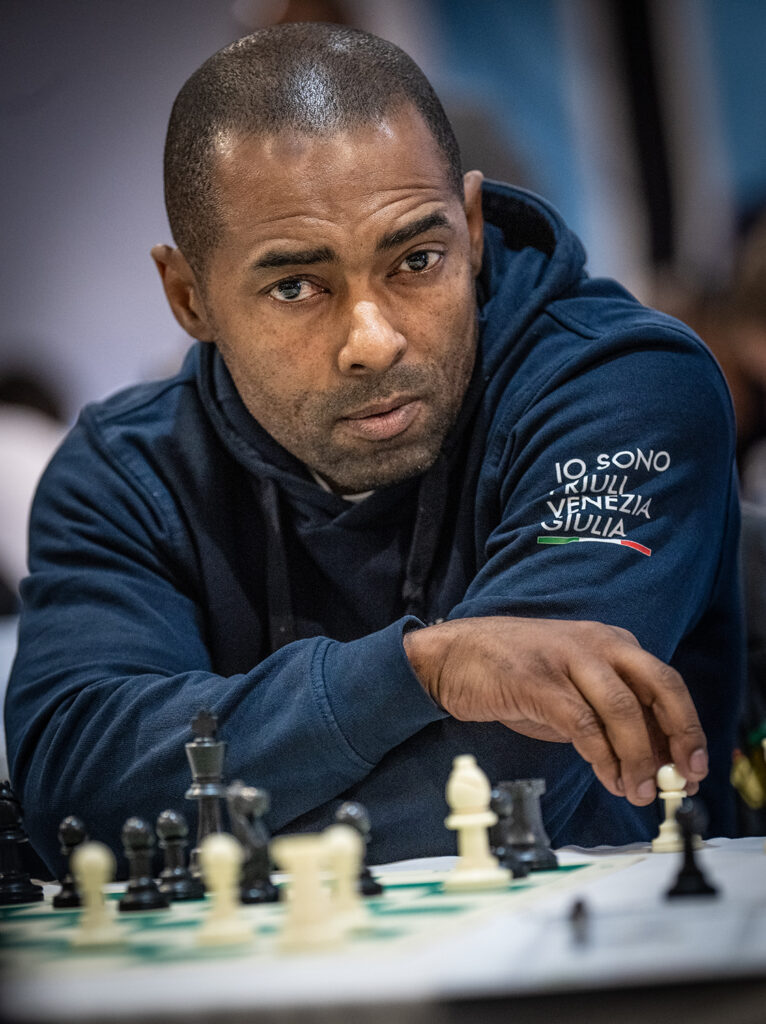
In a single championship, the new regulation provided Solomon with an opportunity that the previous system had not offered Gwaze.
The rules changed in two stages. From July 1, 2013, the champion (gold medallist) of the continental championship received the Grandmaster title directly, with no minimum rating attached. From July 1, 2017, FIDE added the 2300 minimum rating requirement that applies today.
FIDE’s July 2007 rating list shows Gwaze at 2413. Had either version of the regulation existed in 2007, his continental victory would have made him a Grandmaster directly.
The rules changed, but for Gwaze, they changed too late.
Twelve Championships, One Sub-Saharan Winner
Since the introduction of the revised direct-title regulation, the African Individual Championship has been held 12 times.
A review of the final standings from OlimpBase, Chess-Results and FIDE reports shows the following champions:
- 2014 – Windhoek: Kenny Solomon (South Africa)
- 2015 – Cairo: Bassem Amin (Egypt)
- 2016 – Kampala: Abdelrahman Hesham (Egypt)
- 2017 – Oran: Bassem Amin (Egypt)
- 2018 – Livingstone: Bassem Amin (Egypt)
- 2019 – Hammamet: Ahmed Adly (Egypt)
- 2021 – Lilongwe: Ahmed Adly (Egypt)
- 2022 – Lagos: Bassem Amin (Egypt)
- 2023 – Giza: Adham Fawzy (Egypt)
- 2024 – Accra: Bassem Amin (Egypt)
- 2025 – Giza: Bilel Bellahcene (Algeria)
- 2026 – Jwaneng: Bilel Bellahcene (Algeria)

The figures reveal a significant imbalance. Kenny Solomon remains the only champion from south of the Sahara since the direct-title pathway was introduced.
Several other players have come close to claiming the title.
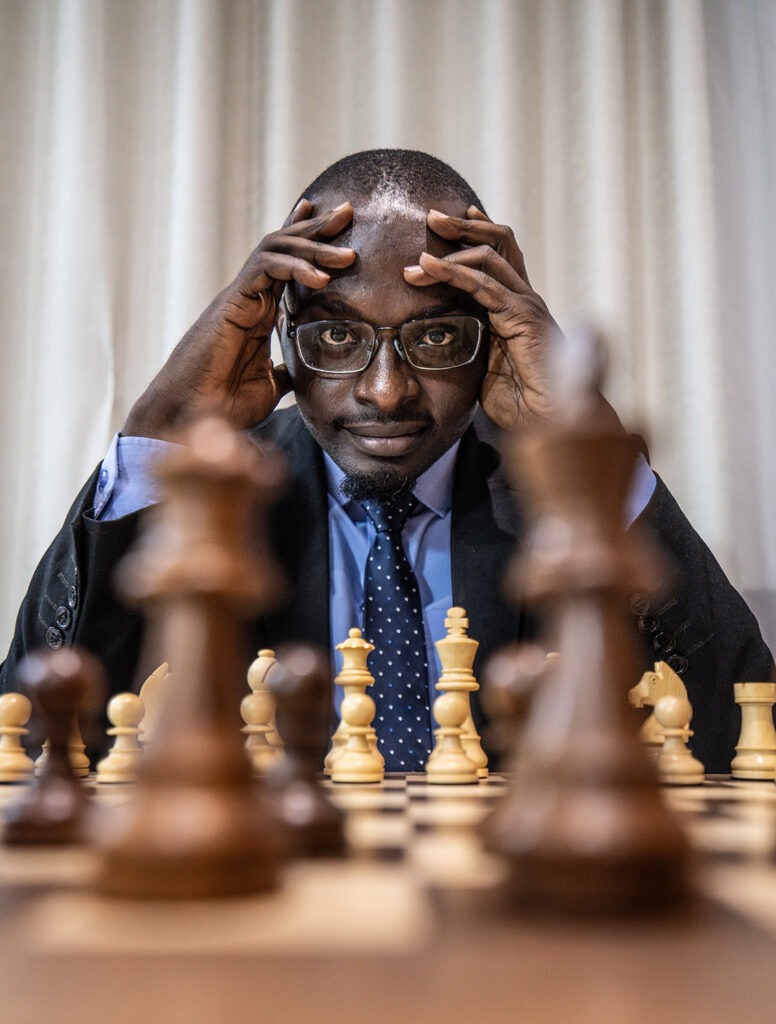
In 2016, Zambia’s IM Andrew Kayonde finished second in Kampala with 6.5/9, just half a point behind Abdelrahman Hesham.
In 2017, South Africa’s IM Daniel Cawdery scored 7/9 in Oran, finishing level with Bassem Amin. The two players had drawn their individual encounter, but Amin secured the title on the next tiebreak, 47.5 to 46.5. Cawdery remains an International Master.

At the 2024 championship in Accra, Zambia’s IM Chitumbo Mwali finished third with 6.5/9, while Amin won the tournament with 8.5/9.
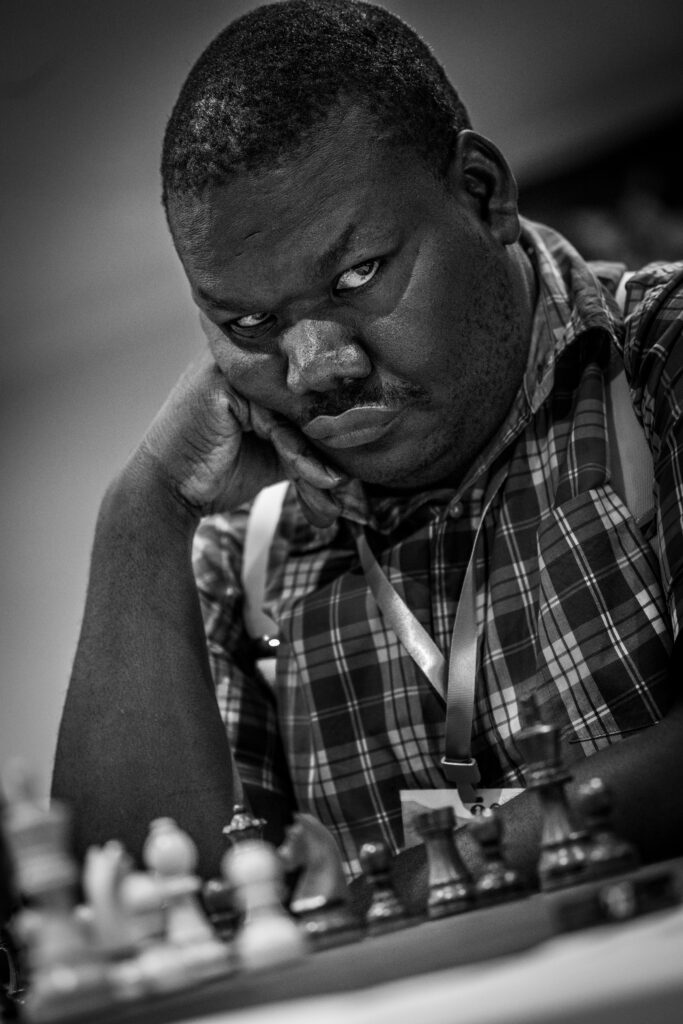
In 2026, South Africa’s FM Banele Mhango claimed bronze, while Namibia’s IM Dante Beukes finished fourth. Both scored 6.5/9, one point behind champion Bilel Bellahcene.
Other players from south of the Sahara have also featured among the top five. They include Andrew Kayonde in 2018, Madagascar’s IM Fy Antenaina Rakotomaharo in 2019, Malawi’s Joseph Mwale in 2021 and Angola’s IM David Silva in 2022. However, each finished at least two points behind the champion in those editions.
The women’s championship presents another dimension to the issue.
South Africa’s Jesse February won the African Individual Women’s Championship in 2021 and again in 2024. FIDE indicated in 2021 that her victory earned her the Woman Grandmaster title, subject to reaching the required rating of 2100.

However, on the November 2026 FIDE rating list, February remains a Woman International Master, rated 2010.
The experiences of these players show that winning, finishing on the podium or even being level with the eventual champion does not always translate into the title players are pursuing.
From Champion to Coach
Around 2013, Gwaze stepped back from regular competitive chess.
He had coached at Hartmann House and St George’s College in Zimbabwe, and also worked on a schools chess curriculum in Cape Town, South Africa. He eventually settled in Windhoek, Namibia, where he continued coaching children both online and over the board.
In January 2022, he published Life and Games of Robert Gwaze, a book reflecting on his chess journey and experiences.
His return to competitive chess came in 2024 when he won the Namibia Open with a perfect 7/7 score, recording his first FIDE-rated games in several years.

But perhaps one of his most important contributions to African chess has been through the players he has helped develop.
Among them is Dante Beukes, Namibia’s top-rated player.
Born in 2003, Beukes won the under-18 category at the 2019 African Youth Chess Championship in Windhoek, competing in an age group above his own. His victory earned him the International Master title directly, making him Namibia’s first International Master. FIDE records the title in 2020.
Gwaze was a driving force behind Beukes’ development.
In January 2021, the two played a ten-game blitz exhibition match in Windhoek, streamed on YouTube. Gwaze won all ten games, finishing with a 10-0 scoreline.

Beukes has since continued to make progress on the international stage. He represented Namibia at the 2023 FIDE World Cup in Baku, where he drew his first game against Croatian Grandmaster Ivan Saric before exiting the competition.
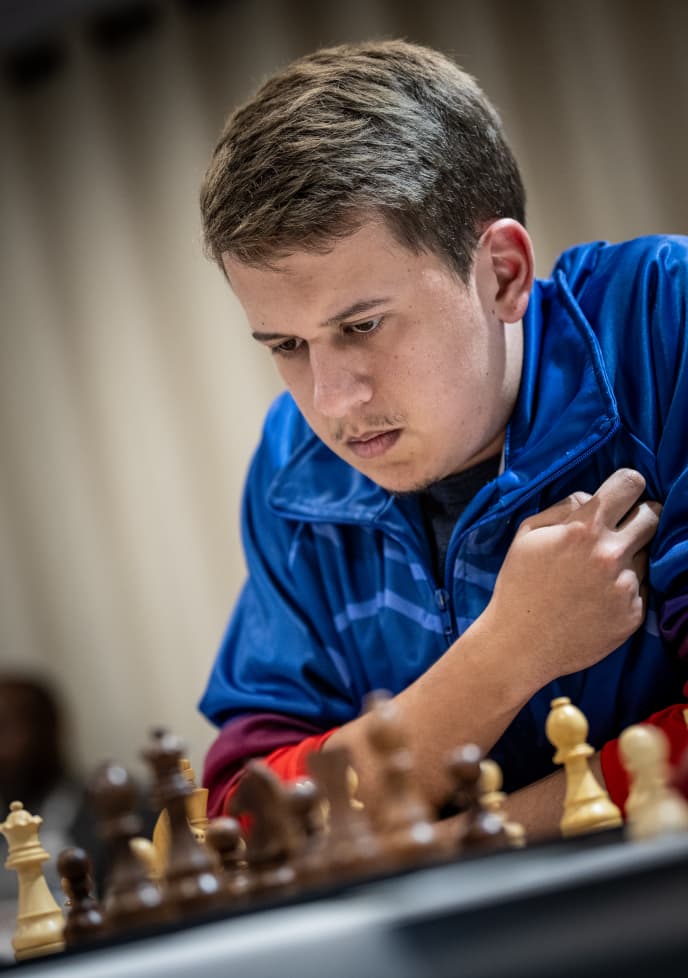
He reached a peak rating of 2324 in September 2026 and finished fourth at the 2026 African Individual Championship, one point behind the champion.
Reflecting on his African Youth Championship achievement, Beukes said:
“Winning the Africa Youth Championship was the most special for me because I won the event on home soil, becoming the first Namibian to achieve the international master title.”
Dante Beukes, to the Namibian Sun, 2023
The connection between Gwaze and Beukes is significant. A player who once came close to the Grandmaster title under difficult circumstances has helped produce one of Namibia’s strongest players and its first International Master.
It is evidence of the value of experienced coaches and the importance of sustained player development.
A Call to Federations and Sponsors
On the November 2026 FIDE rating list, Africa has 16 Grandmasters, but only two of them, Zambia’s Amon Simutowe and South Africa’s Kenny Solomon, earned the title while representing a federation south of the Sahara. Senegal’s only Grandmaster earned his title for Spain in 1994 and transferred to Senegal in 2022.

Gwaze’s career illustrates the cost of this gap. A player capable of scoring 9/9 at an Olympiad and winning the African Individual Championship accumulated two Grandmaster norms but, by his own account, found the cost of travelling to tournaments to be the biggest obstacle to securing the third. Beukes, Mhango, Mwali and other emerging African players face similar challenges.
Closing this gap requires more than celebrating exceptional performances. It demands a deliberate, long-term approach to player development.
Long-term player development must come first. Federations, working with the African Chess Confederation, must invest in strong junior programmes, experienced coaching, regular competitive opportunities and international exposure. The process of producing Grandmasters must begin long before players reach the International Master level.
Financial support must complement this development structure. Sponsors and federations should identify players who have demonstrated the potential to reach the Grandmaster title and provide targeted assistance for tournament participation, international travel and other essential costs. Support should be based on merit, measurable progress and a clear development plan.
There is also a need to organise more norm-capable round-robin tournaments and open competitions within Africa, with the required mix of Grandmasters and foreign players. Such events would give African players more opportunities to earn norms without having to depend entirely on expensive trips outside the continent.
The continental championship now offers a direct route to the Grandmaster title, but it provides only one open title opportunity each year for the entire continent. Africa cannot rely on that single opportunity to close a gap built over decades.
Robert Gwaze’s story is not simply about a title he never received. It is a reminder that talent must be matched by opportunity, preparation and sustained support. His achievements deserved more than admiration; they deserved a system capable of taking him further.

Africa must build that system now, so that the next generation of players will not have to wait for a change in the rules, or struggle against the cost of pursuing their potential.
Africa Chess Media welcomes responses from federations, coaches and organisers, as well as sponsors willing to help create stronger development pathways and Grandmaster norm opportunities across the continent.
