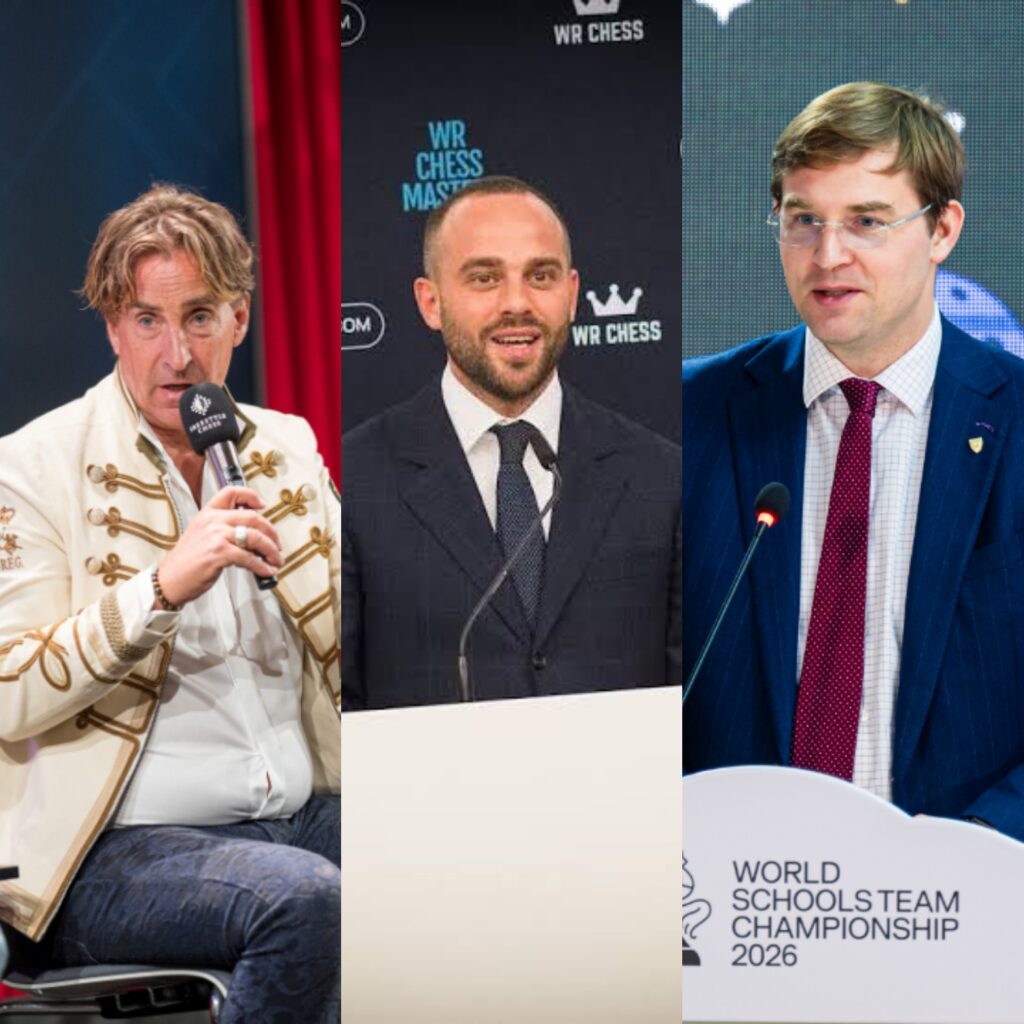
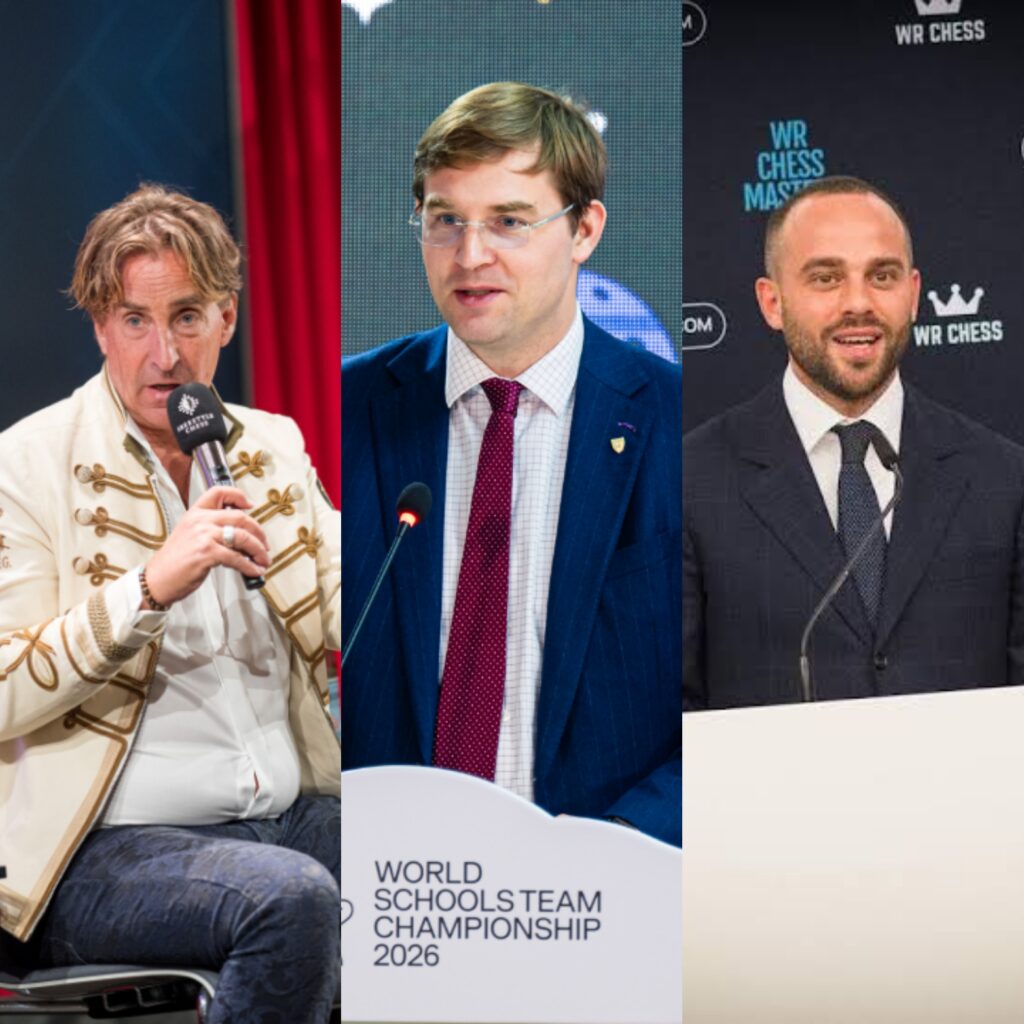
In a late-August interview with Africa Chess Media, Jan Henric Buettner, IM Malcolm Pein and Vukani Dlamini spent an hour telling Africa Chess what their FIDE presidential ticket would do if it wins in Samarkand on September 26.

The line they kept returning to was simple. Africa, they said, does not have a talent problem. It has an opportunity problem.
That is a campaign sentence. The useful question is what they attached to it: money, trainers, events, and a timeframe. This piece sets out that package as they described it, and where the wording still needs to be read carefully.
The Money: a Royalty, not a Favour
The centrepiece is a written pledge that 20 percent of FIDE revenue, excluding prize funds, would be paid to member federations every year.

Pein framed it for an African audience as INDEPENDENCE. For a decade and a half inside FIDE, he said, the pattern has been the same: every four years someone arrives asking for a vote and offering a tournament or a sliver of support. “To hell with that. That ends now with us.” If the share is written into the regulations, federations would receive a predictable sum and decide how to spend it, subject to basic governance.
Two Clarifications Matter, Because The Interview Compressed Them.
First, this is not “20 percent of FIDE’s budget goes to Africa.” The published commitment is an equal grant to every member federation. On the ticket’s own conservative maths, that is about €15,000–€30,000 per federation per year, on top of existing development programmes. For a small African federation that is real money to do real work, every year. It is the same cheque England or India would get.

Second, current FIDE support is not zero. The Planning and Development Commission’s ordinary federation grant is capped at €5,000 per application for eligible development-level federations, and FIDE has advertised a €1.6 million development fund for 2026, with €400,000 earmarked to empower national federations. The Buettner pitch is that a rules-based royalty would replace the feeling of waiting for the president’s chequebook, not that FIDE has never spent a euro on Africa. The question is: Has it been developmental? Has Africans truly benefited from it the way they should have?

Buettner’s supporting claim is that the 20 percent only becomes serious if the cake grows. He points to US$27.5 million raised in a year for Freestyle Chess as evidence he can sell the game to sponsors who, he says, have been wary of FIDE’s lack of transparency. That is a commercial argument. It is also untested at FIDE scale. The share is only as large as future revenue, and Jan is staking his reputation on ensuring this evolution.
The Coaching Grid: One Structure from Children to Titled Players
Pein calls the development document the African Chess Revival.
In the interview he described a stacked training system paid for by FIDE:
- A leading trainer assigned to Africa, giving a monthly lecture for national teams.
- A women’s trainer, with a monthly lecture for each African women’s team.
- Junior trainers for under-18, under-14 and under-10, also on a monthly cycle.
- A 2300+ Club: regular training for African players who have reached International Master level and then stall.
- The same logic taken down to the best under-8s.
He also promised teaching materials, not only Zoom calls: opening-analysis subscriptions and rented cloud-engine time, the stack he says he used when raising more than a million dollars from the British government for English chess.
On schools, the ticket wants FIDE to walk into African education ministries with an existing platform (ChessKid, and Chessable at a smaller scale), and offer it as a government tool, not a private-school extra. Pein’s scalability line was Chess.com’s user base: 100 million regular users globally, 9 million in the UK alone. The point is mass participation without building a new app from scratch.
None of this has a published headcount, salary bill, or start date beyond “First 100 Days.” It is a design, not a signed contract with named coaches. Roman Vidonyak was mentioned as the sort of calibre they admire; Pein immediately added that he is probably too much in demand to be the Africa post.
Events, Norms, and Who Runs The Room

The ticket says it will put extra support into the African Junior Championships and Zonal events, because those are where norms and titles are actually available on the continent. Continental championships sit in the same basket. Buettner added the broader aim: more tournaments, more norms, more titles, more ratings and more prize money at home.
On the biggest event of all, Pein stated a date. The ticket would commit to bringing the Chess Olympiad to Africa in 2030 or 2032. That is a headline promise. It is also a General Assembly and bidding-process promise, not something a new president can simply declare in week one.
First 100 Days: They Want a Timetable, Not a Speech
Asked what the opening stretch would look like for Africa, the answers were operational:
- Start implementing the 20 percent share.
- Launch a four-year Africa Action Plan (Pein said the detailed version runs to about 20 pages).
- Recruit the trainers and put arbiter courses on a calendar with staff attached.
- Show “action, not speeches.”

Dlamini, speaking as the African name on the ticket and the candidate for treasurer, put it in audit language: compliance and measurable delivery of development funds, not policy papers that go into a cupboard.
Visas: the question African players always ask last; were put directly to the panel. In this interview they did not produce a mechanism: no promised visa cell, no letter-of-invitation standard, no fund for rejected applications. Pein pivoted to the royalty, the mix of business and chess experience, and the Olympiad bid. That gap is part of the record. Parents and organisers who live with embassy queues will notice it.
What This Article is Not

It is not an endorsement. It is not the ticket’s biography, and it is not the governance rewrite (Council versus Management Board, Dlamini’s independence as treasurer).
This is the shopping list they put in front of African federations: a predictable grant if FIDE revenue holds, a coaching ladder if the posts are actually filled, more local norm events if the calendar is funded, and an Olympiad bid with a year attached.
The test they set for themselves is the one Pein used for everyone else. No more scraps every four years. Either the 20 percent is written into the rules and the trainers appear on a timetable, or the sentence about opportunity was only a good line in an interview.