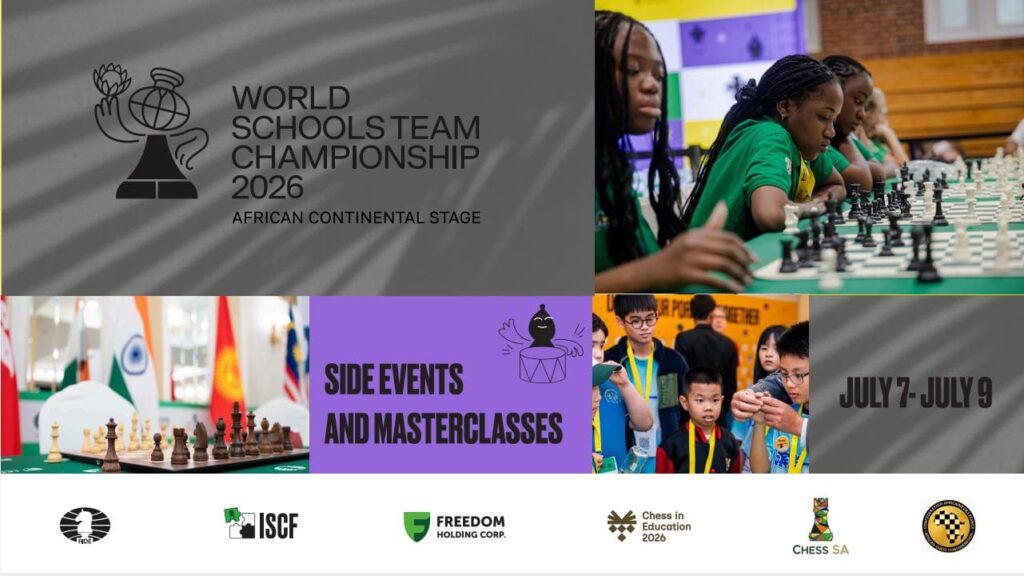
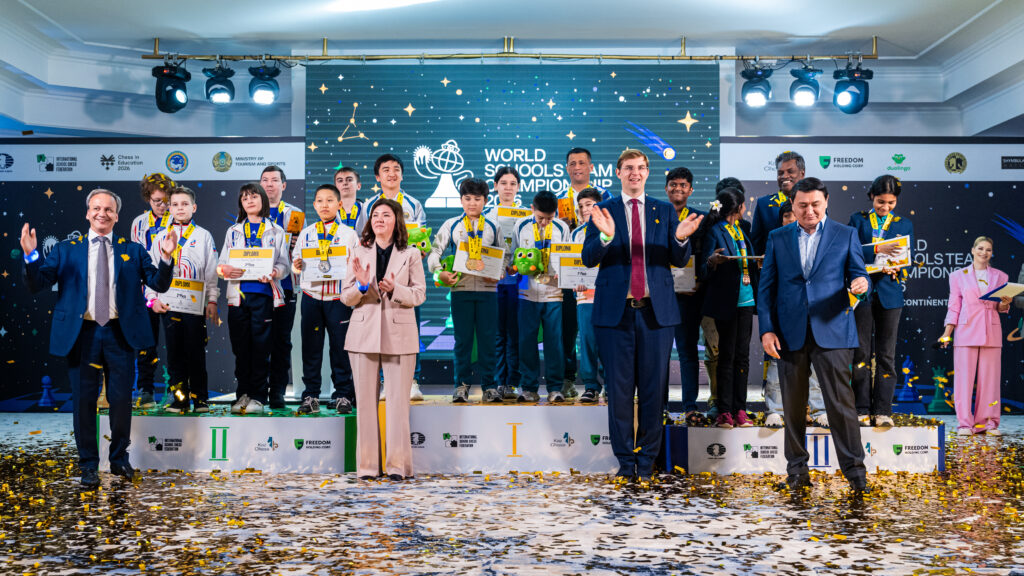
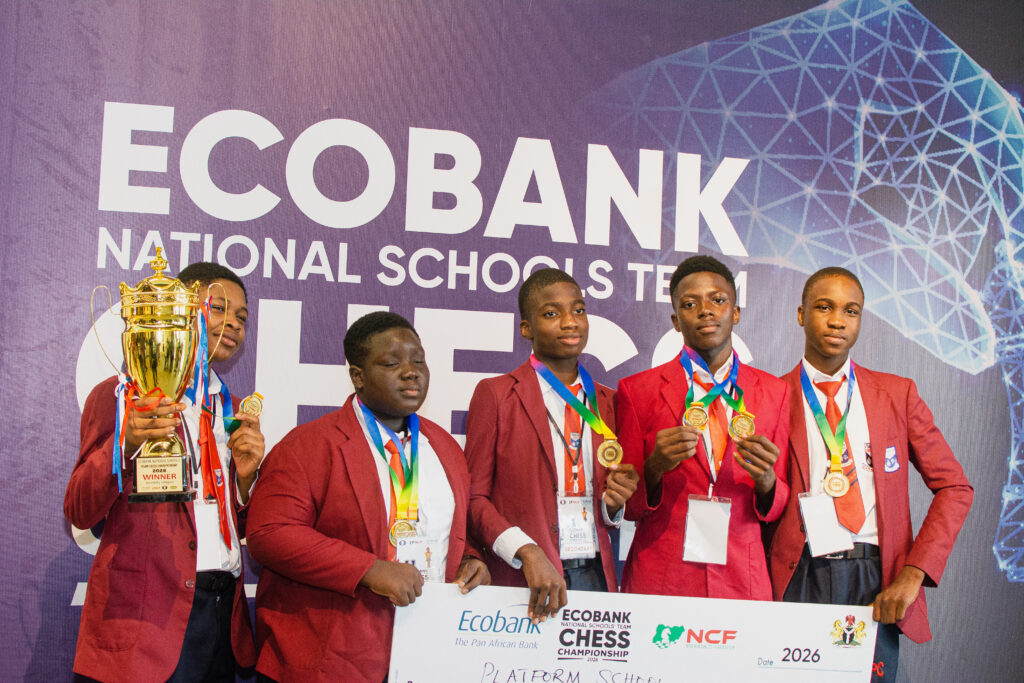
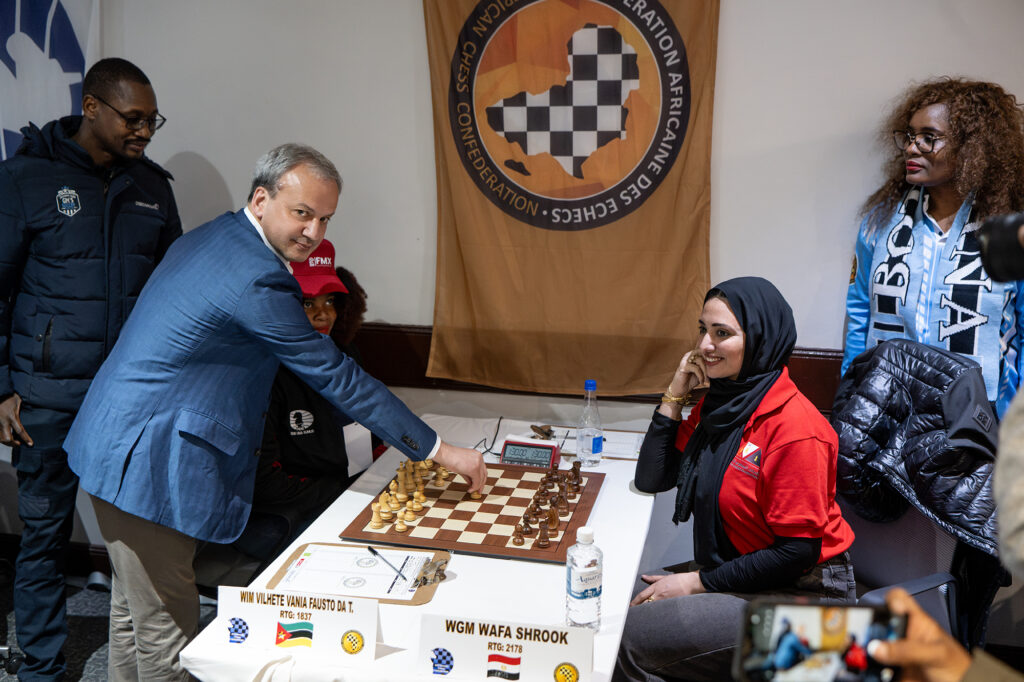
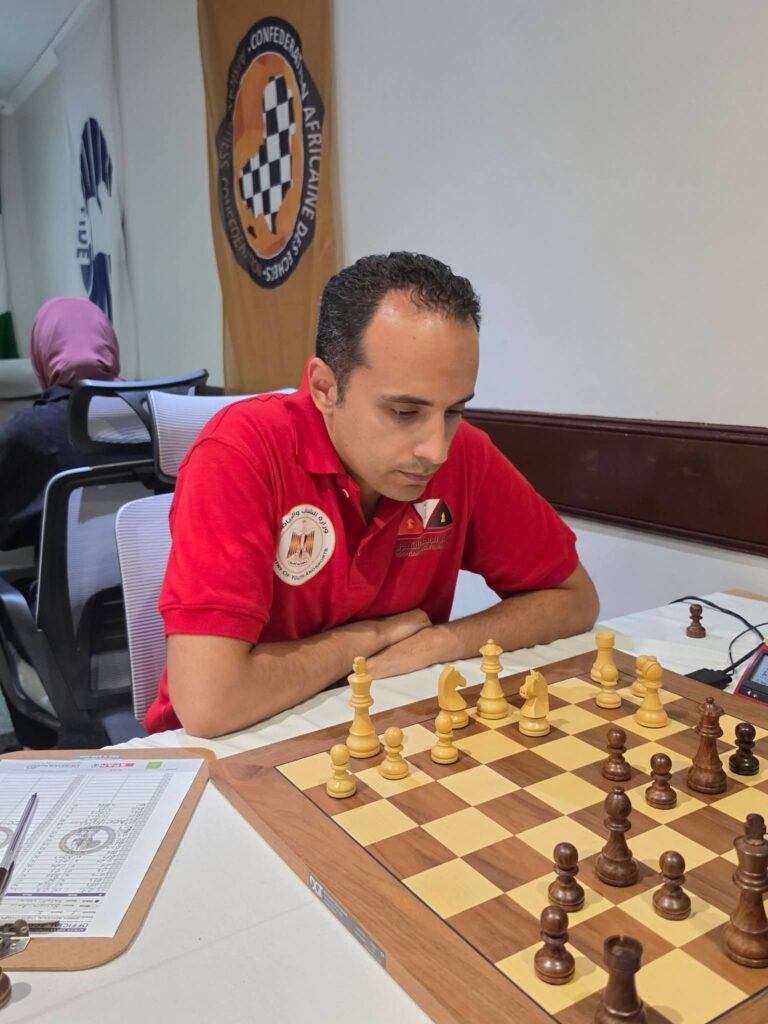
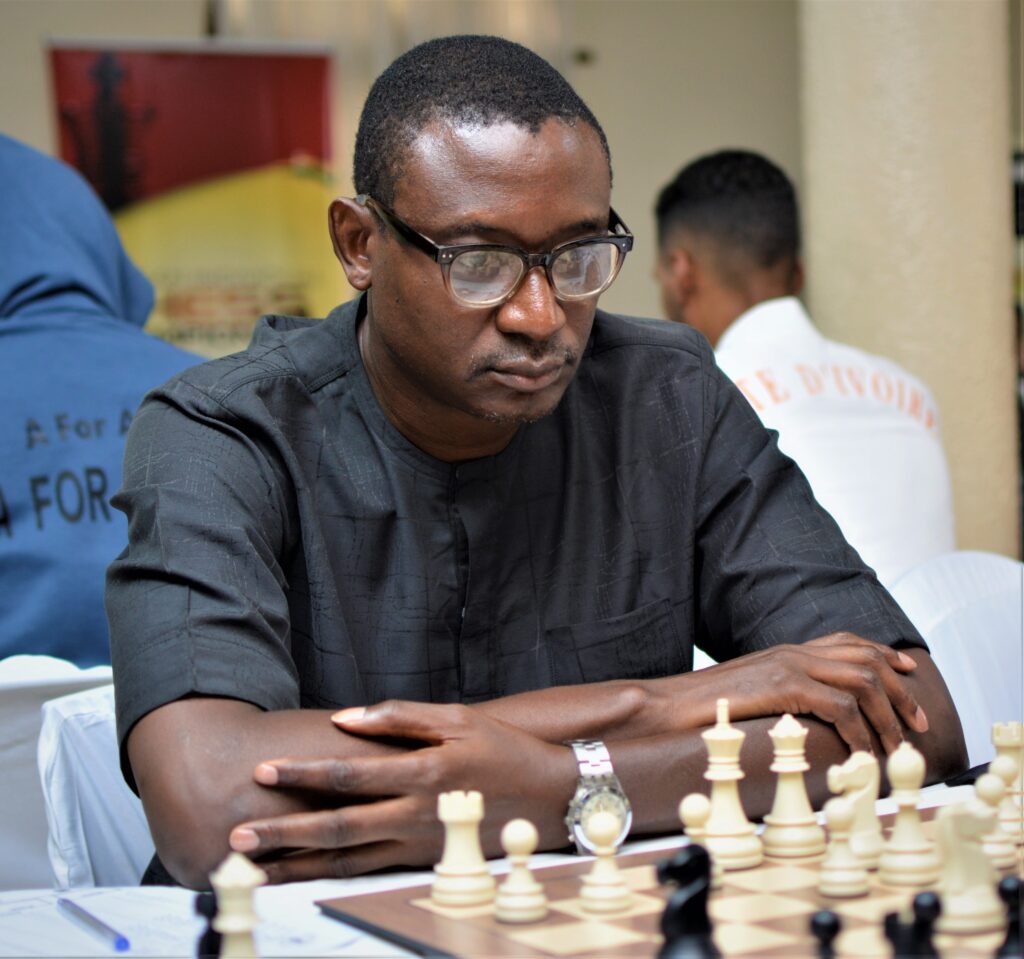
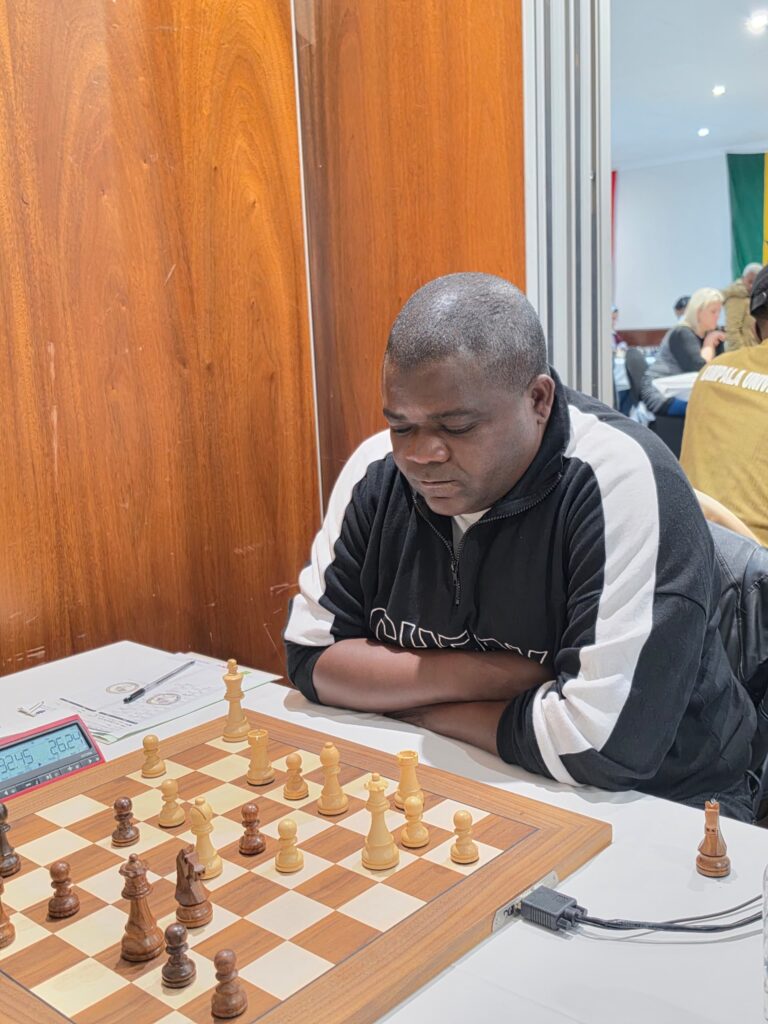
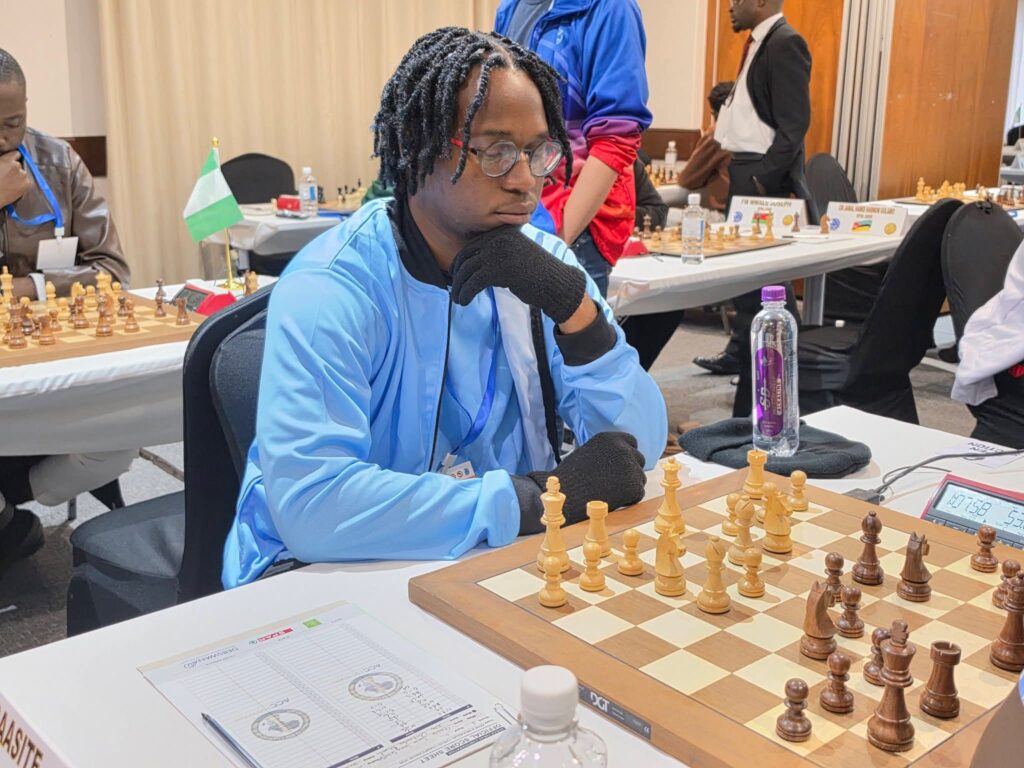
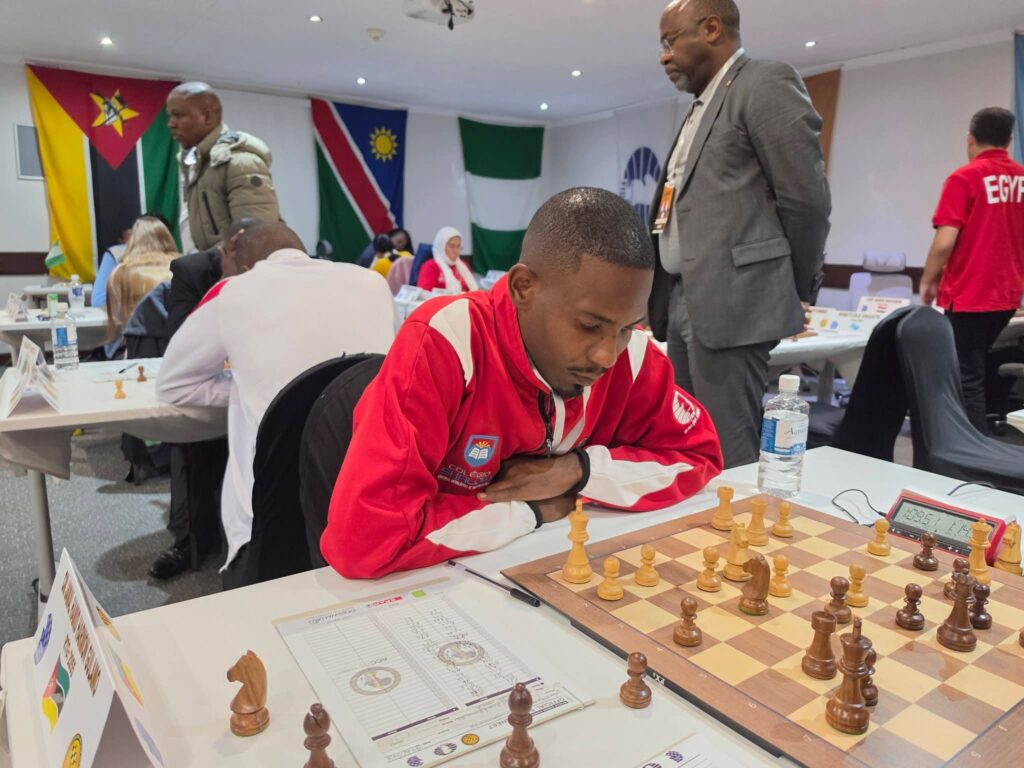
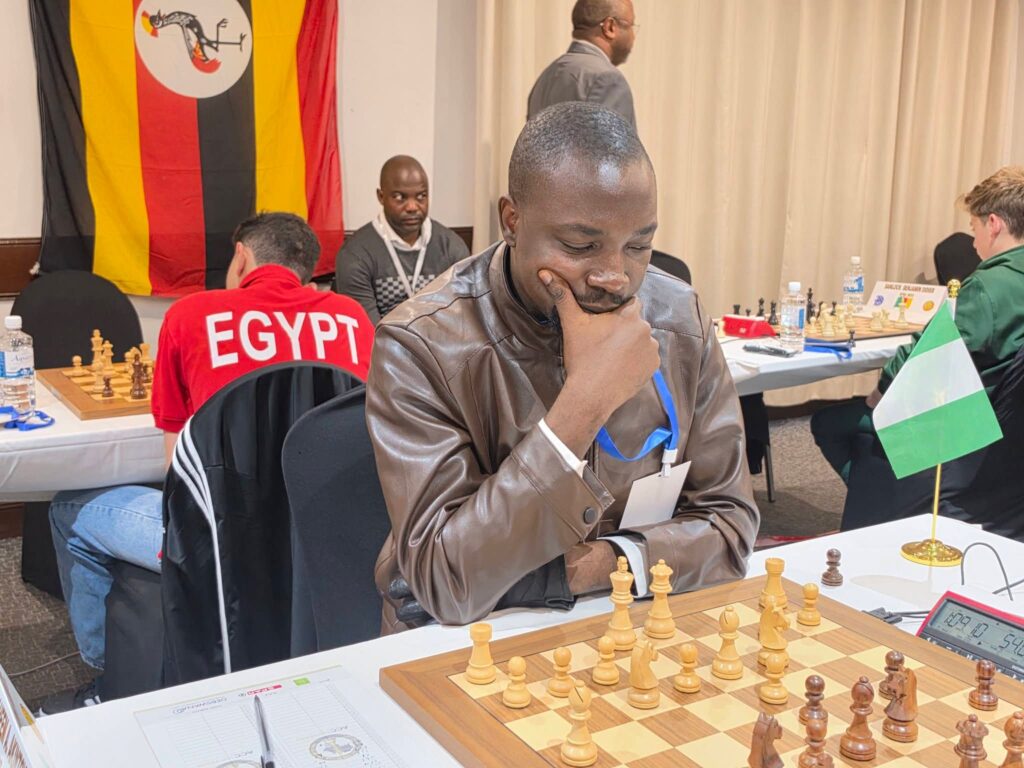
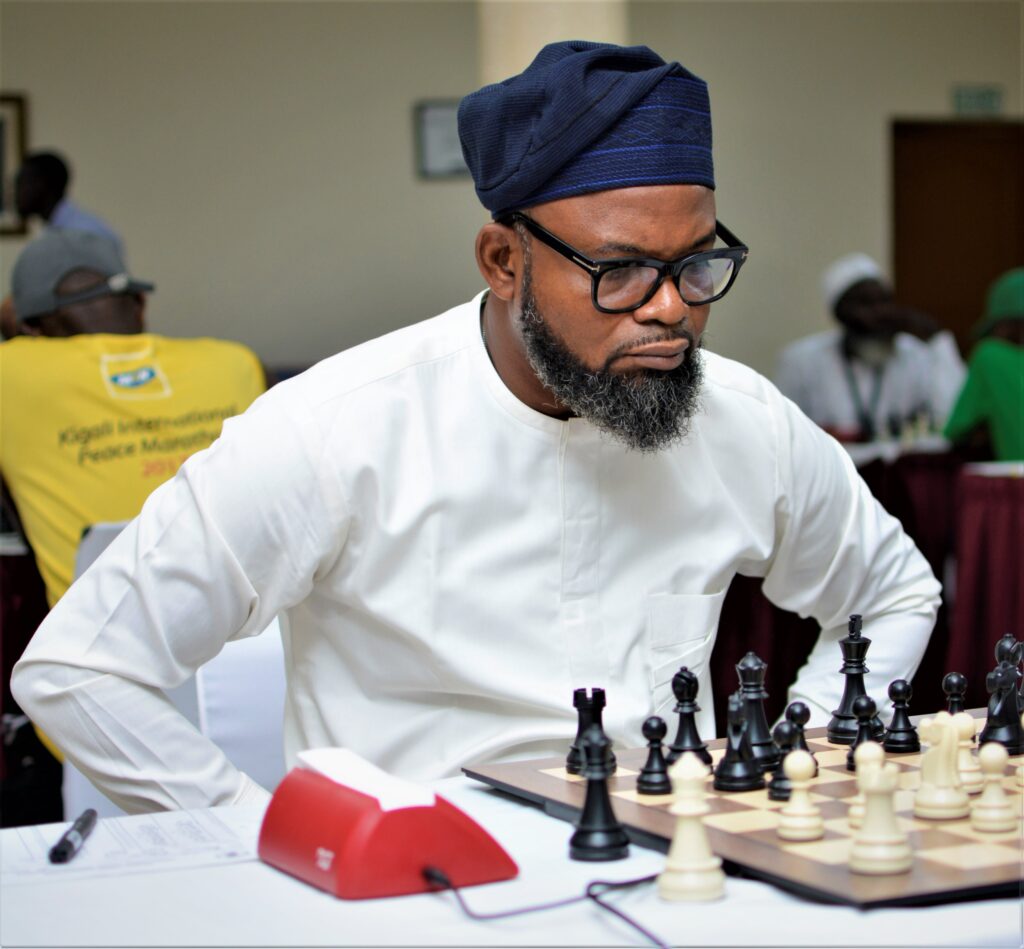
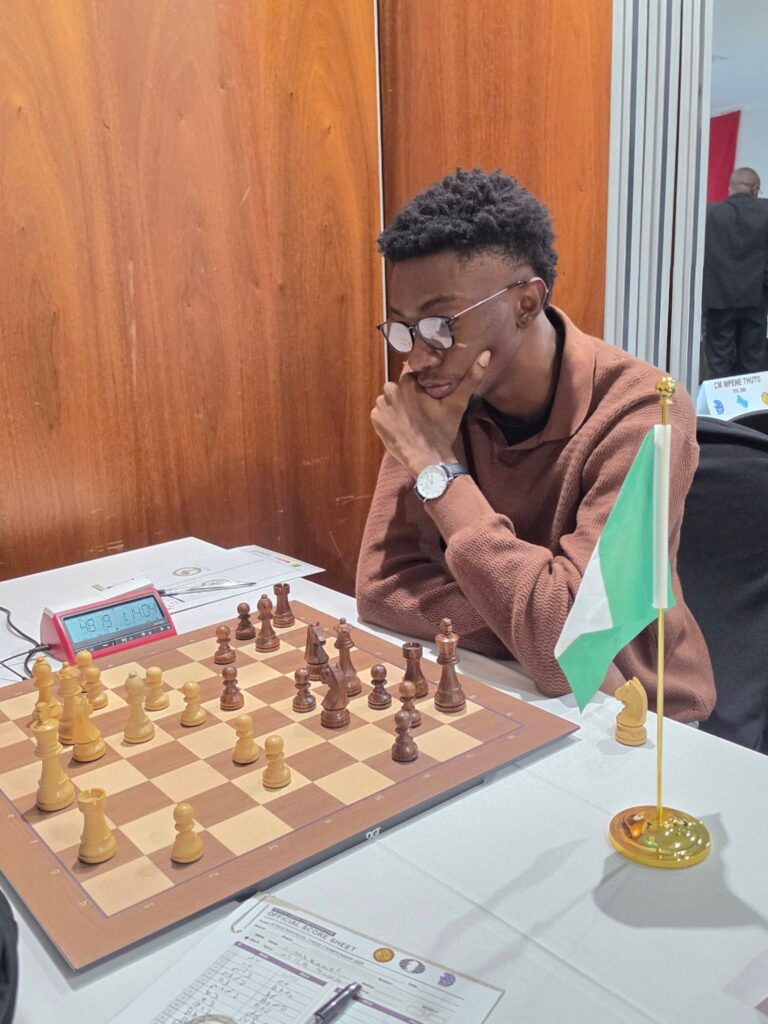
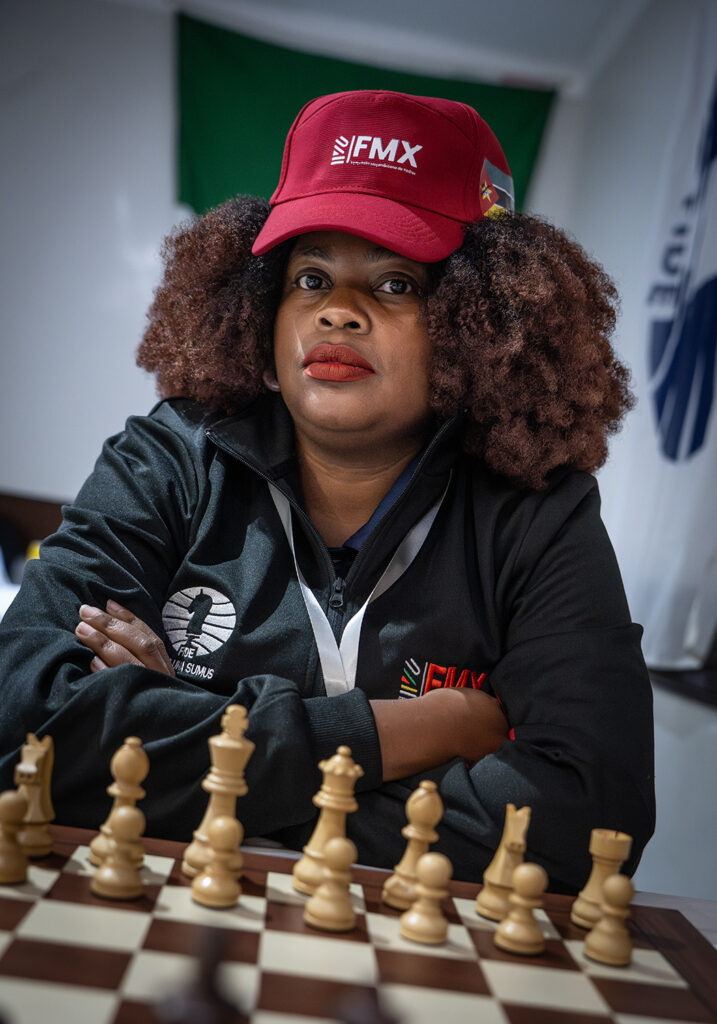
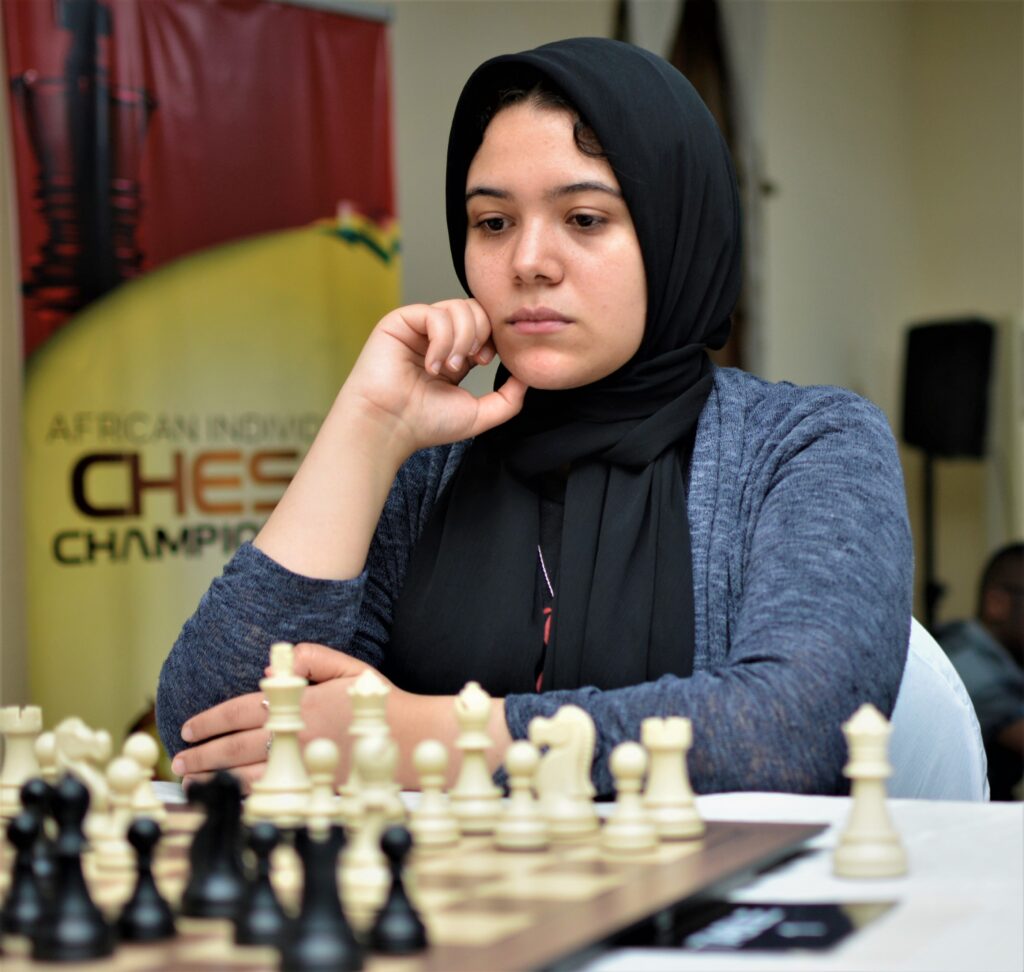
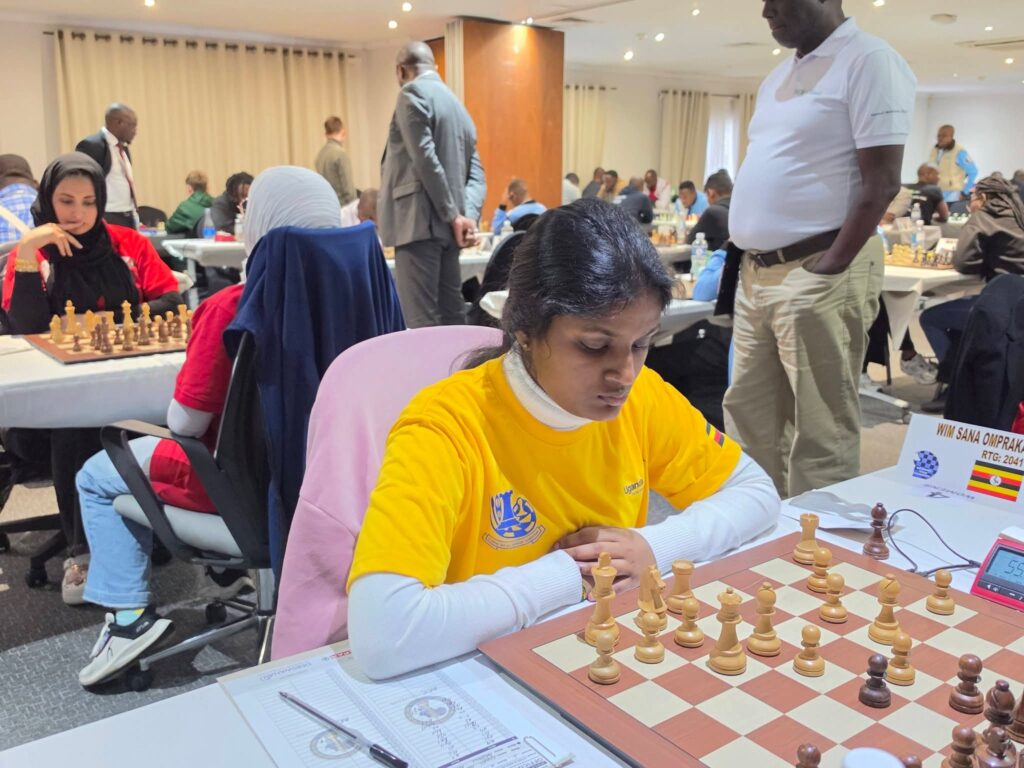
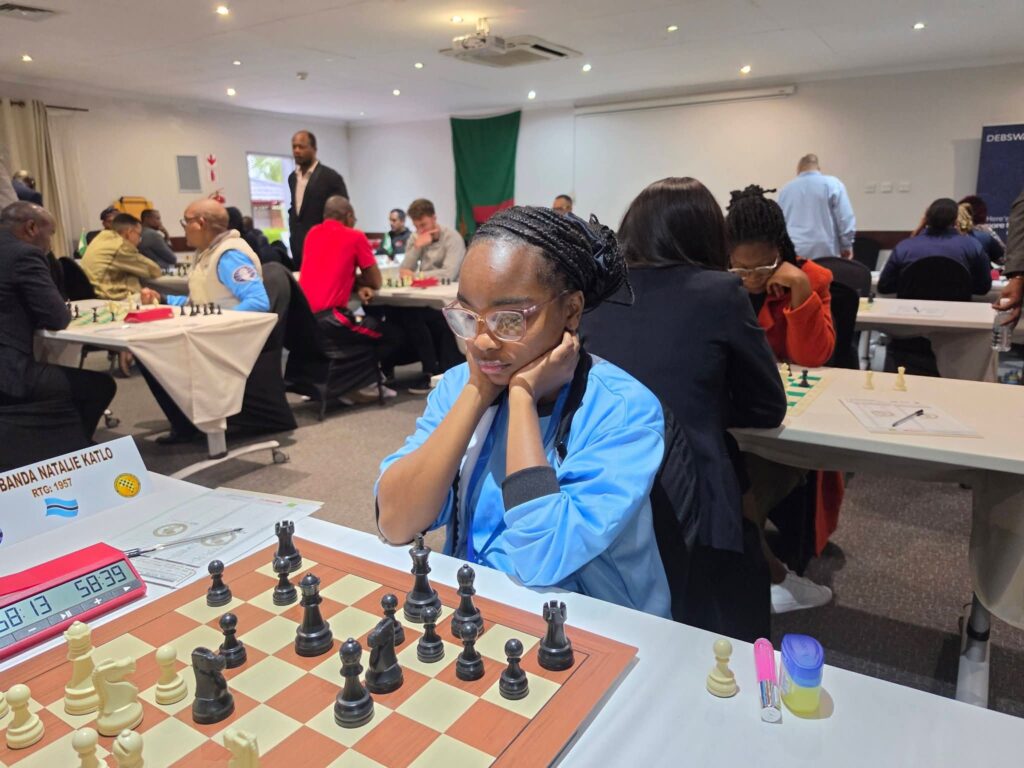
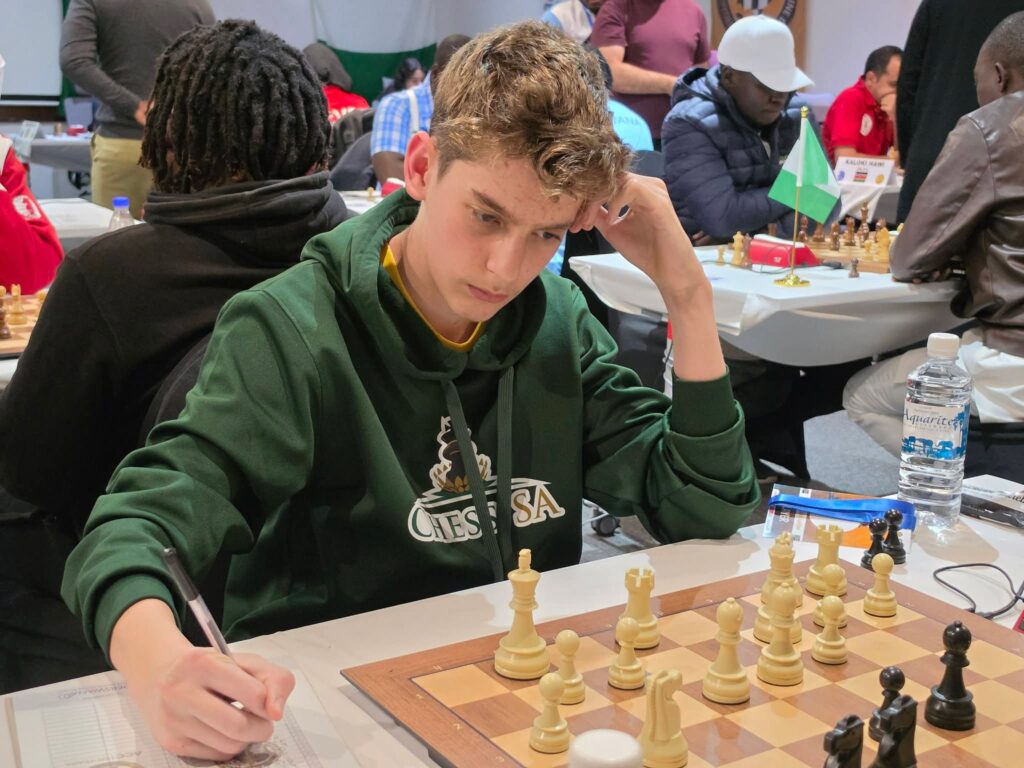
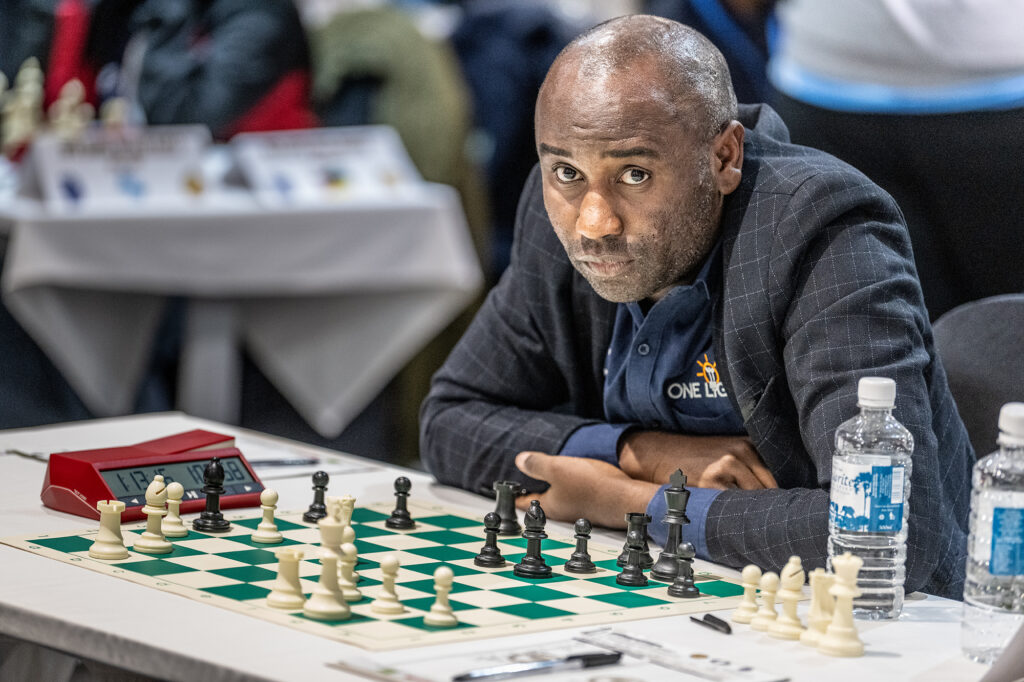
The African Continental Stage of the FIDE ISCF World Schools Team Championship 2026 officially began on Tuesday at the Coetzenburg Centre in Stellenbosch, South Africa, marking a historic milestone as the prestigious event is being hosted on African soil for the very first time.
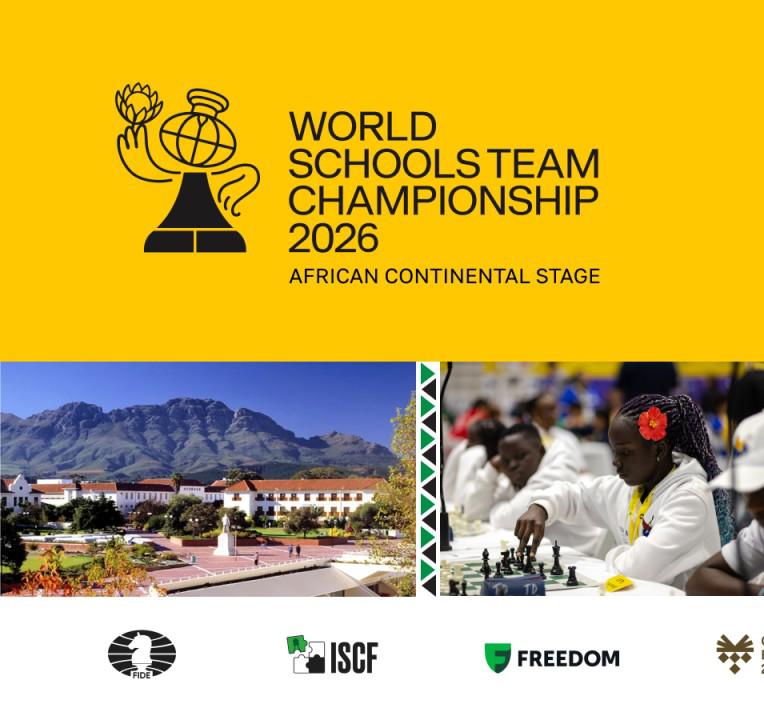
Twenty-six (26) school teams representing 22 African nations have converged on the renowned university town to compete for qualification spots to the World Schools Team Championship Grand Finale later this year.

Beyond the battle for titles, the championship forms part of FIDE and the International School Chess Federation’s (ISCF) Year of Chess in Education, celebrating chess as a powerful educational tool that develops critical thinking, creativity, teamwork and resilience among young learners.
A Shared Vision for Chess in Education
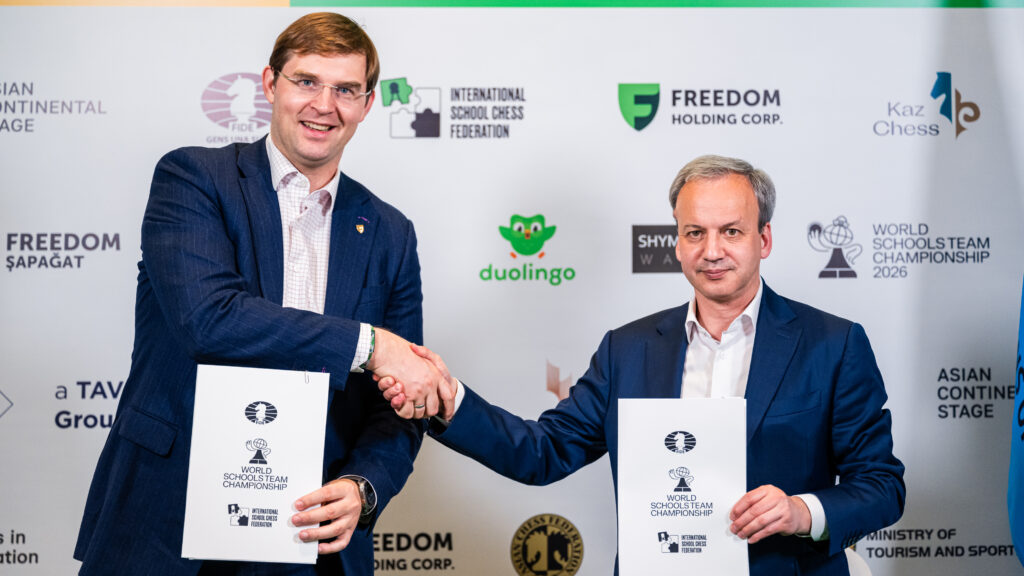
The championship is jointly organised by FIDE and the International School Chess Federation (ISCF), with the support of Freedom Holding Corp., whose continued investment has made the global expansion of scholastic chess one of its major social initiatives.

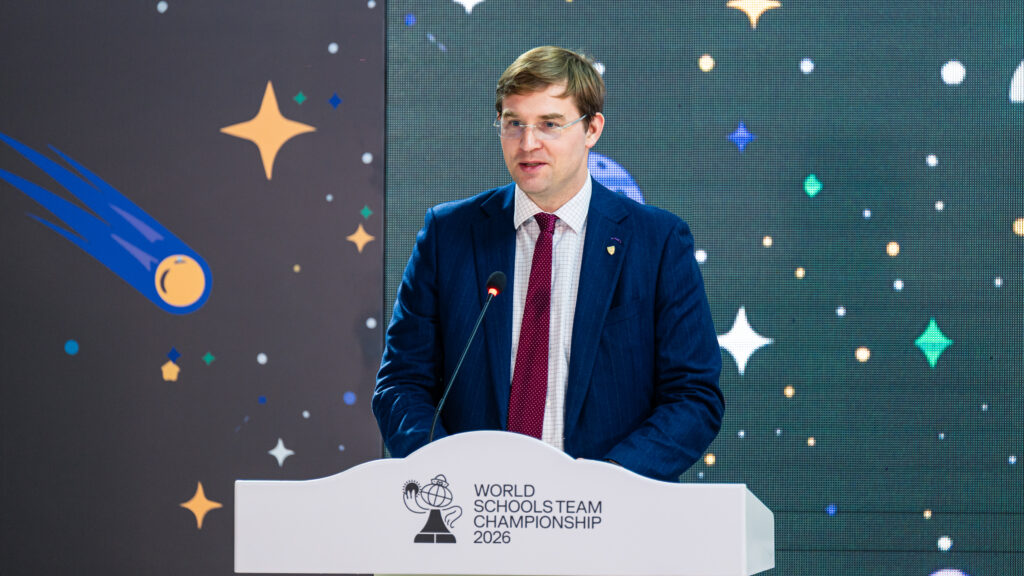
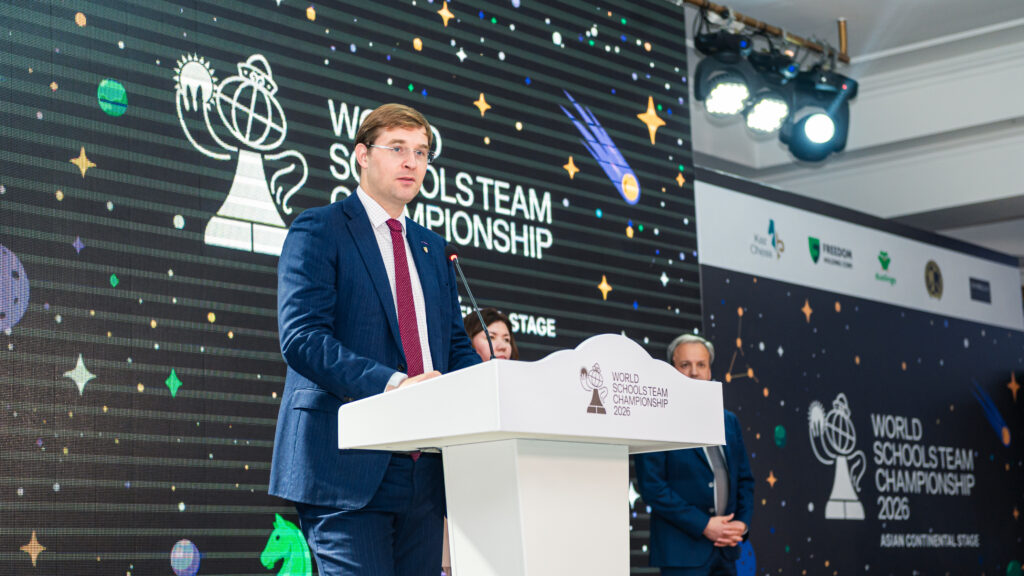
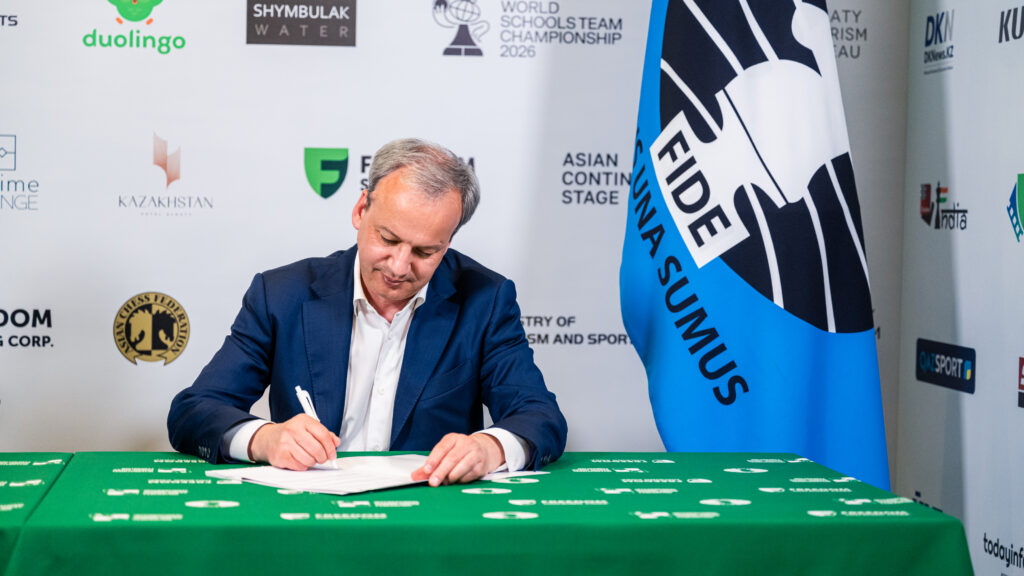
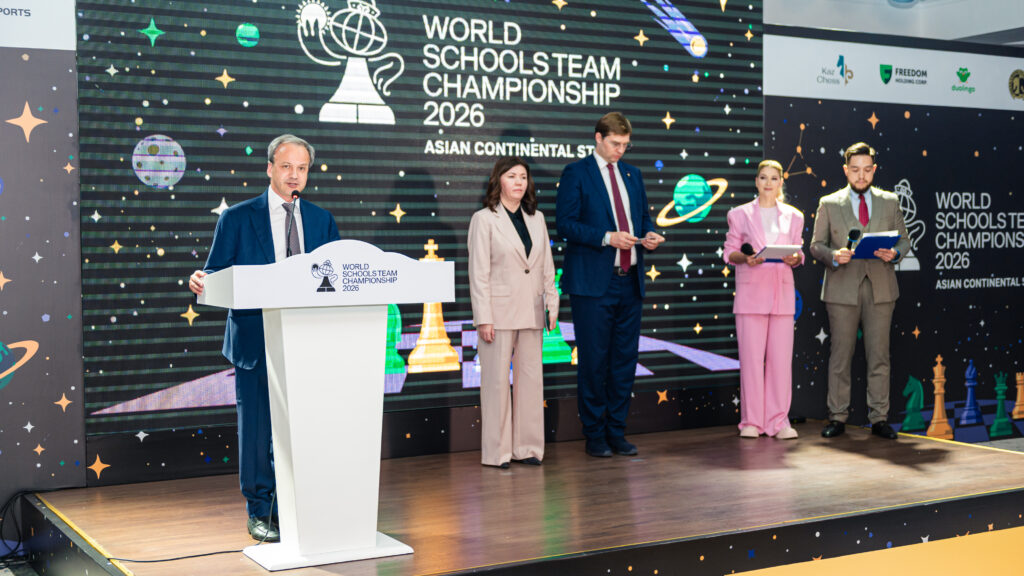
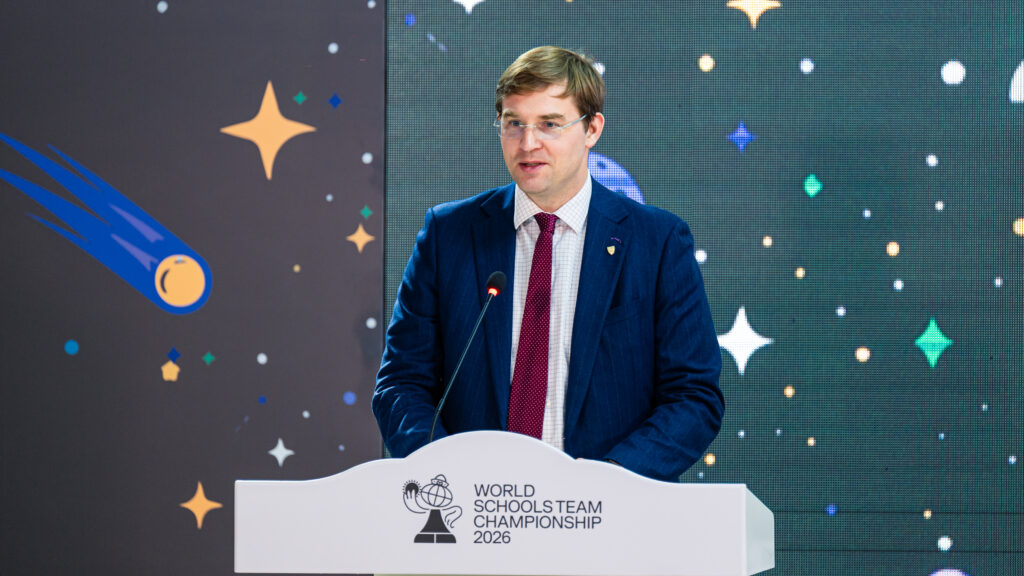
Speaking during the opening ceremony, FIDE President Arkady Dvorkovich reflected on the remarkable growth of the championship.
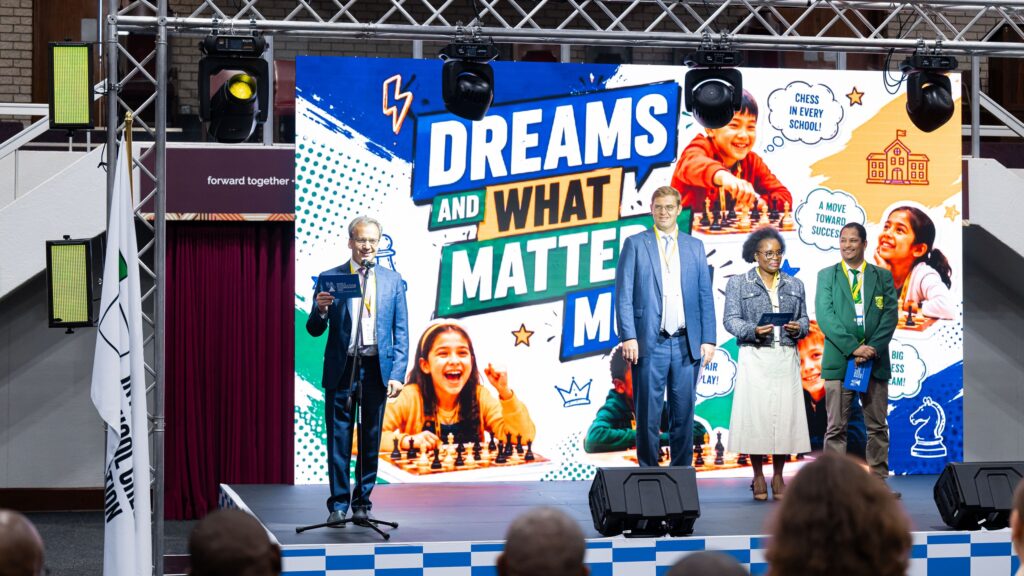
“When we started the World Schools Team Championships a couple of years ago, we were experimenting a bit, thinking how to do it in a proper way to involve more and more schools, more and more countries. Now we are confident that in the end we’ll have more than 100 countries competing, which is exciting. And it’s going to be five different countries, five different hosts, so that improves the capacity of local federations to move chess forward.”
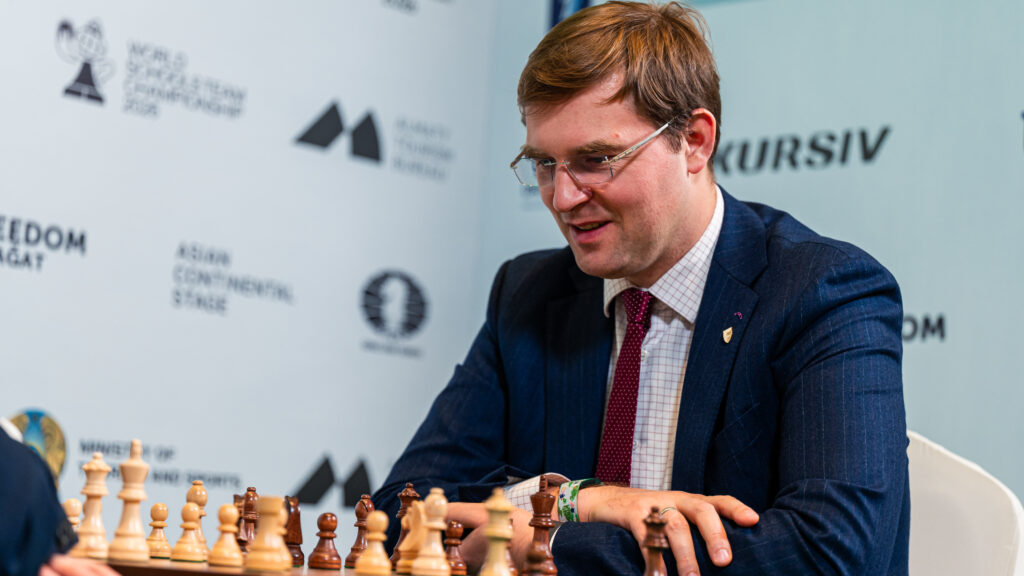
ISCF President Timur Turlov highlighted the importance of teamwork, noting that the school championship reflects the values young people will need throughout life.
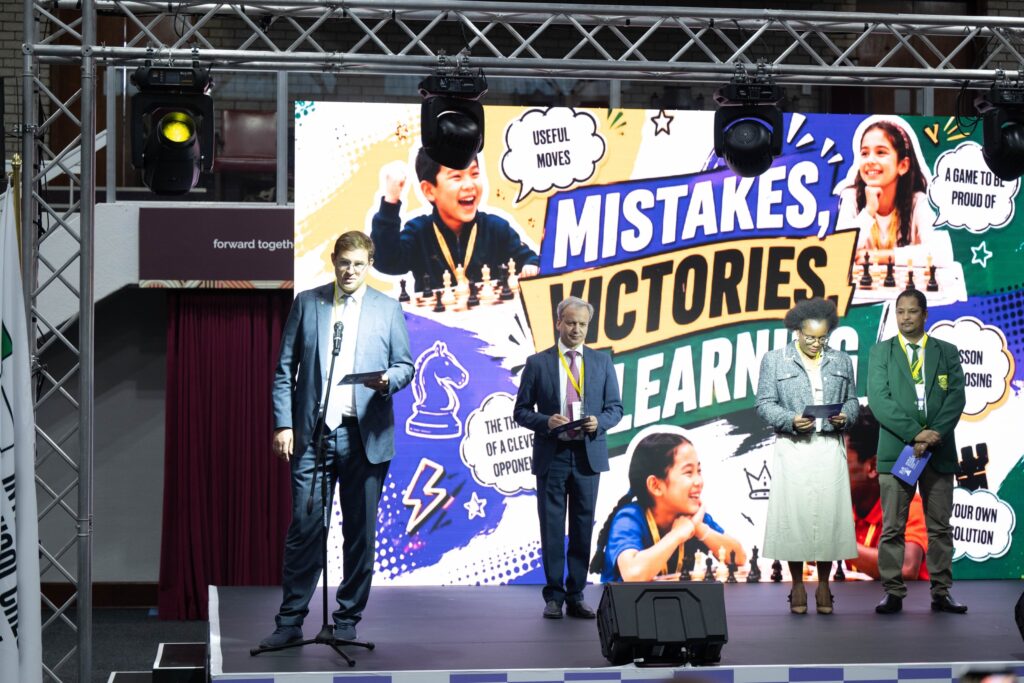
“I think it’s very human to team up, and only as a community can we build some great things. All the big institutions, all the big enterprises, are always teams of people. If the whole team is great, if the whole school is great, that creates much better opportunities for development because you can rely on your teammates and together create something really unique.”
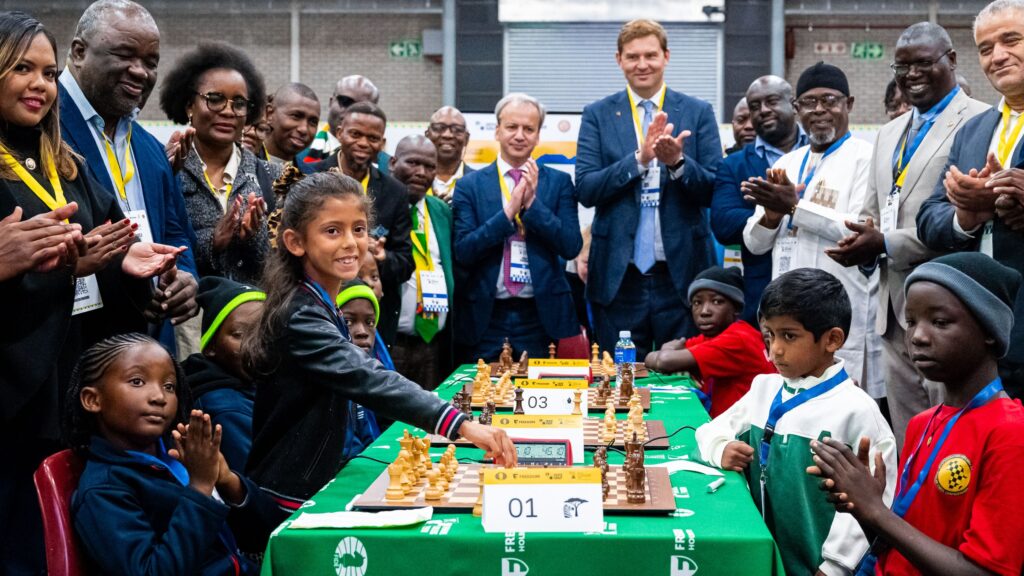
The Opening Ceremony Departed from Tradition
Instead of lengthy official speeches, the dignitaries read inspiring letters written by children who had participated in previous continental stages, reminding the young competitors that friendship, learning and courage matter just as much as winning.
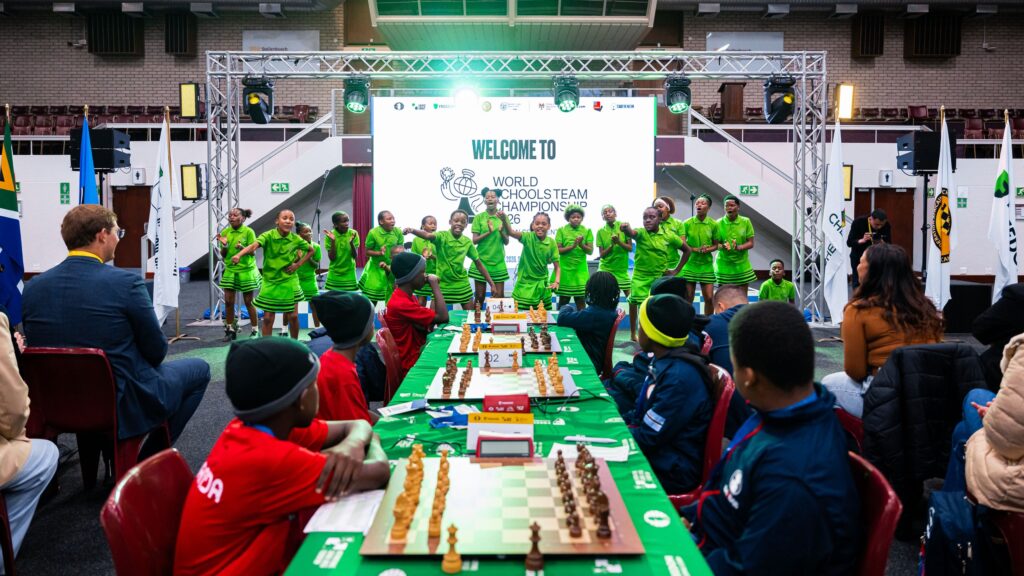
The event also highlighted the invaluable support of Freedom Holding Corp., whose partnership with FIDE and ISCF continues to strengthen chess education initiatives around the world while creating new opportunities for young players to compete internationally.
More Than a Championship: The African Continental Stage Reflects a much Broader Educational Movement.
Earlier this year, FIDE and ISCF launched the ISCF “Chess in Education” Grant Program, designed to help national federations, schools and educational organisations expand successful chess-in-education projects that have already demonstrated measurable impact.
Rather than funding new ideas, the programme focuses on scaling proven initiatives and bringing chess into more classrooms across the world as part of the Year of Chess in Education. Applications are open to: Schools (public and private), Educational organizations and NGOs, Foundations and social enterprises. You can take advantage of this Grant if you apply before July 31, 2026. Find out more about the grants on the FIDE website.
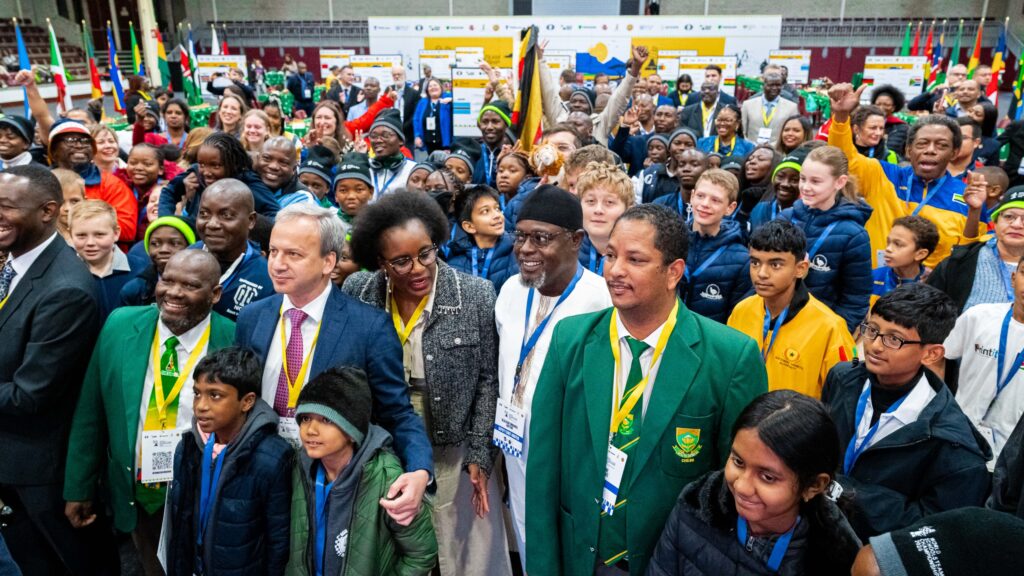
For many of the students competing in Stellenbosch, the championship represents that vision in action. A remarkable ninety-one (91) participants are unrated and are making their international debut, underlining the event’s emphasis on participation, learning and opportunity alongside elite competition.
Ghana Makes The First Statement
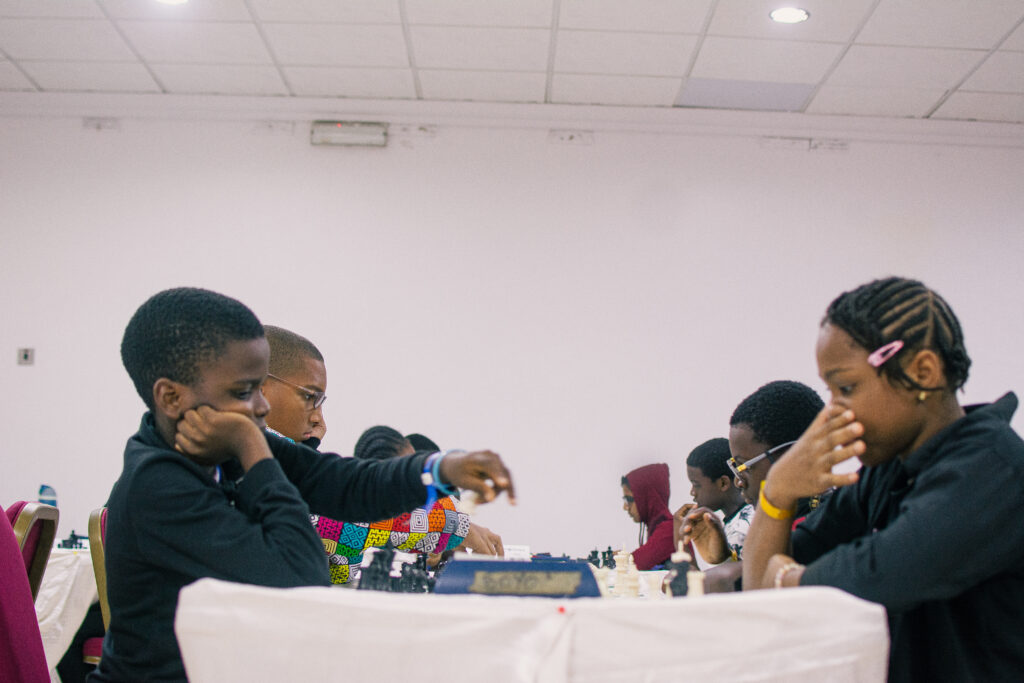
Competition began with two rounds of play under the tournament’s eight-round Swiss format, with each team fielding four players and one reserve in mixed-gender line-ups.
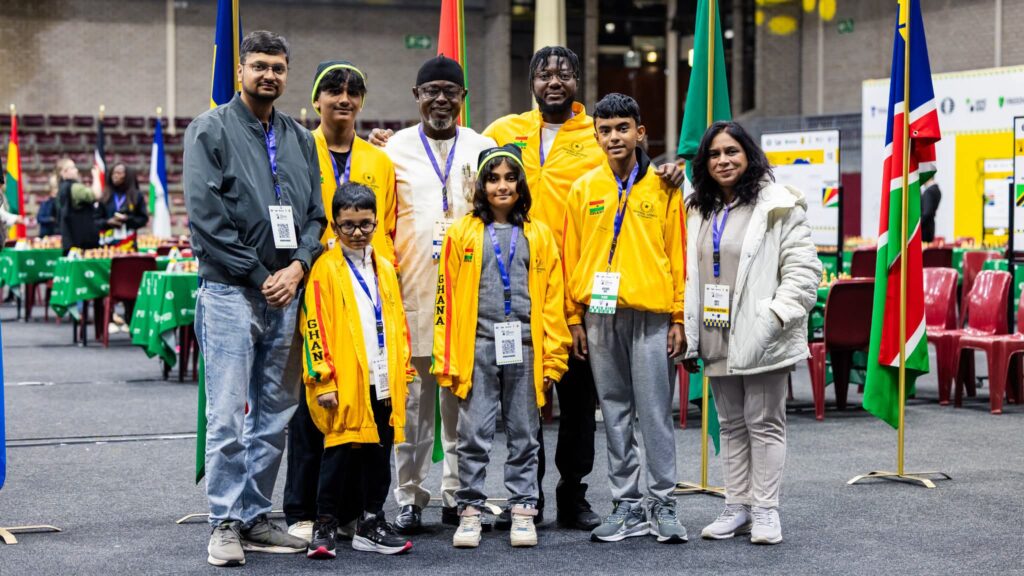
After an impressive opening day, Ghana’s Delhi Public School emerged as the sole leader, winning both of its matches and edging the other unbeaten teams on tie-break.

Kenya’s Moi Nyeri Complex Primary School occupies second place ahead of Uganda’s top-seeded Sr. Miriam Duggan Primary School, while Namibia’s Windhoek Afrikaanse Privaatskool completes the group of teams on a perfect four match points.
Madagascar, Angola and Seychelles remain well placed after collecting three match points from a win and a draw, while several teams sit just behind the leaders with plenty of chess still to be played.
With six (6) rounds remaining, the Swiss pairing system is expected to produce increasingly competitive encounters as the leading teams begin facing one another.
A Continental Celebration
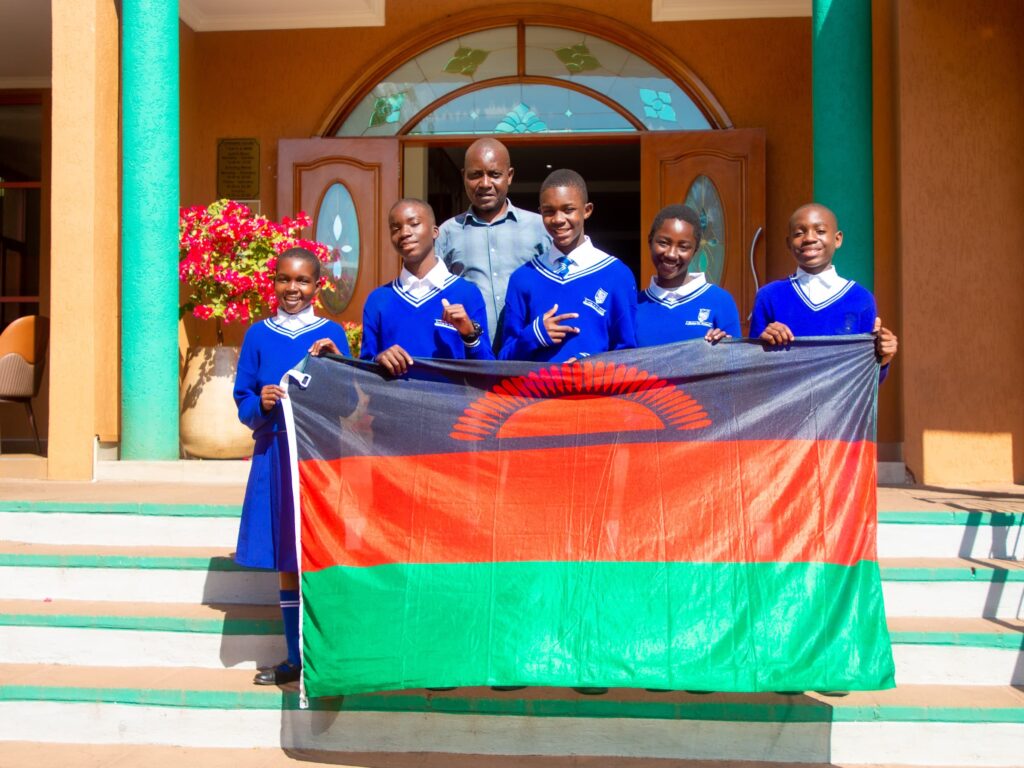
The championship brings together schools from Angola, Botswana, Burundi, Cameroon, Eswatini, Gabon, Ghana, Kenya, Lesotho, Madagascar, Malawi, Morocco, Mozambique, Namibia, São Tomé and Príncipe, Seychelles, South Africa, Tanzania, Uganda, Zambia and Zimbabwe, creating one of the most diverse gatherings of young chess players ever seen on the continent.
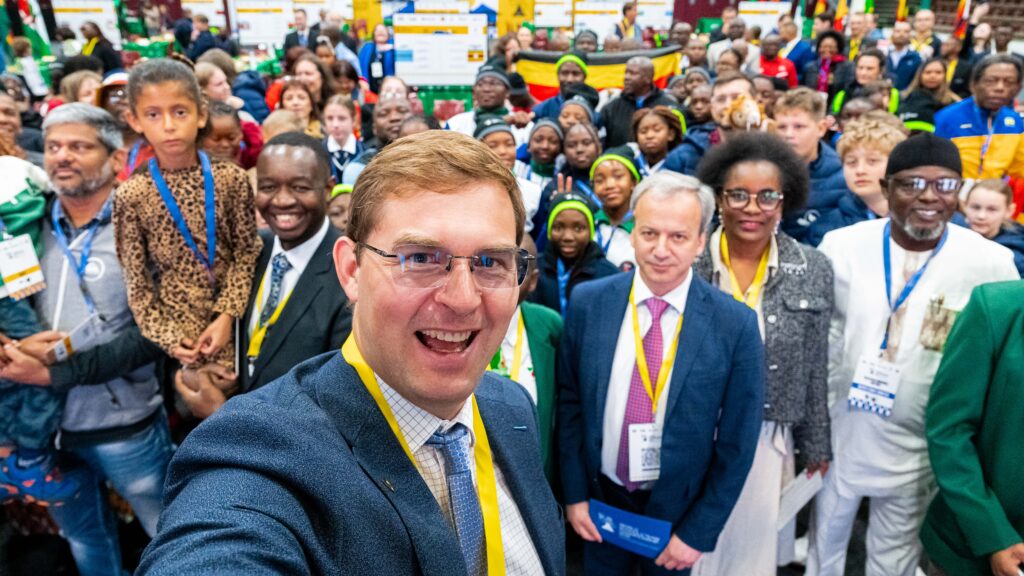
Although a small number of qualified teams were unfortunately unable to travel to Stellenbosch because of administrative travel challenges, it does not take away the efforts and work that FIDE and CHESSA has put into the success of this event.
While their absence is felt, the championship continues to demonstrate the growing strength of school chess across Africa, with dozens of young players making their first appearance on the international stage and forging friendships that extend far beyond the chessboard.
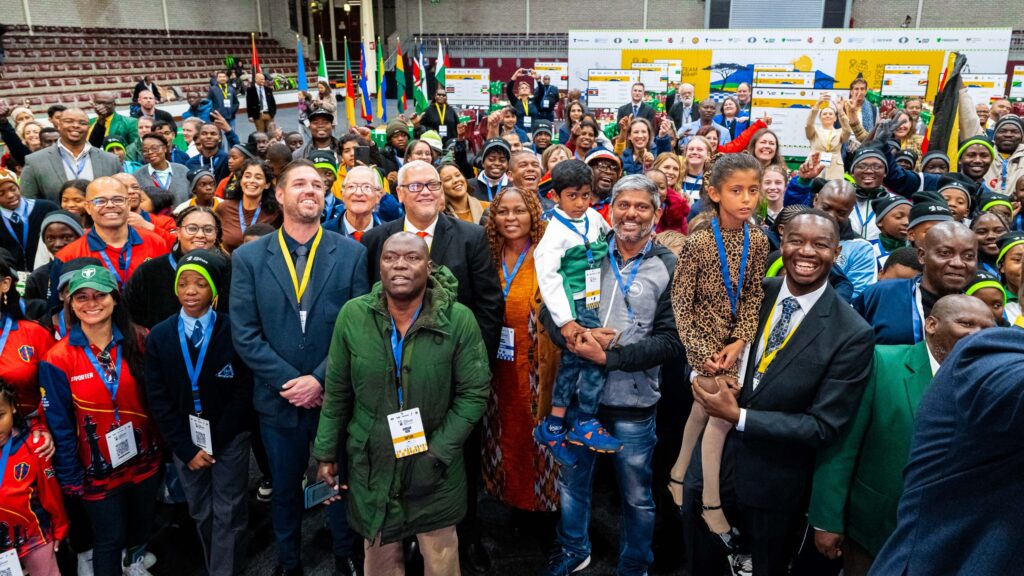
The tournament continues today with Rounds 3 and 4, where the early leaders will look to maintain their momentum, and others bid to catch up, as the race for qualification to the World Schools Team Championship Grand Finale gathers pace.